« Isolation de la toiture et des combles. Différence ressentie dès l'hiver suivant. Petit retard de planning, mais résultat à la hauteur. »
Thomas R.Mons
The bio-based insulant par excellence. Made from shredded recycled newspaper treated with borate salts, cellulose insulates in winter just as well as conventional wools — but above all, its high thermal capacity slows summer heat like no other common insulant. Eco-friendly, with very low embodied energy, and strong on acoustics.
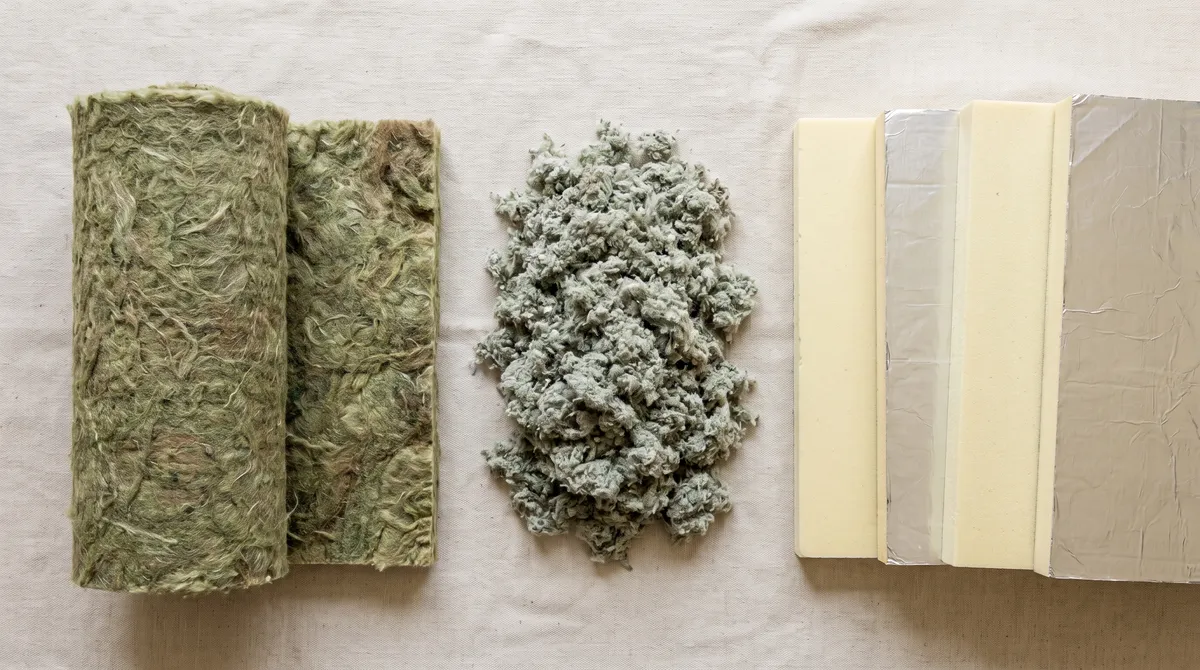
The figures that matter for a bio-based insulant installed by our teams. Concrete benchmarks, no greenwashing.
On a par with good mineral wools. To reach R = 6 m²K/W in an attic (the grants target), you need about 24 to 26 cm of blown cellulose — a thickness easy to achieve in an unconverted attic.
This is its major asset. Its high thermal capacity (dense material) strongly slows heat: under a roof, the outdoor heat peak only reaches the inside late in the evening, heavily dampened. Far more effective than light wool against overheating.
Cellulose absorbs then releases water vapour without losing its qualities: it buffers the wall’s moisture and improves comfort. A well-controlled installation (with a suitable vapour-check membrane) remains essential.
Its mass and fibrous structure make it an excellent sound insulant: airborne noise, impact noise and rain noise on the roof are clearly dampened, better than light insulants.
The borate salts make the cellulose flame-retardant and antifungal (protection against mould and rodents). It doesn’t ignite but chars slowly; its fire class stays below that of rock wool (A1).
Made from recycled paper, lightly processed and often produced locally: its embodied energy is among the lowest of any insulant. A leading choice for an eco-conscious approach and a durable renovation.
* Indicative values for common-range loose-fill cellulose. The thermal lag depends on the installed density and thickness. Exact performance confirmed during the survey.
No insulant is perfect everywhere. Here, honestly, is where cellulose excels and where you need to be careful.
It comes into its own whenever you’re after summer comfort, an eco-conscious approach and good acoustic performance. A few cases where it shines:
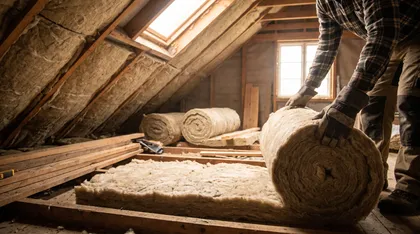
The ideal playground: cellulose is blown loose over the attic floor, in thick layers, quickly and with no cutting. Excellent performance-to-price ratio.
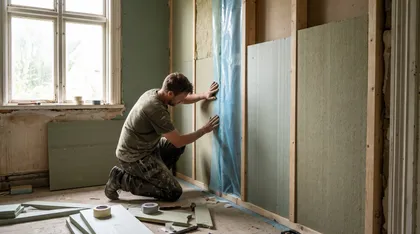
Injected at high density into closed cavities (frame walls, slopes), cellulose fills every cavity with no thermal bridge and limits settling.
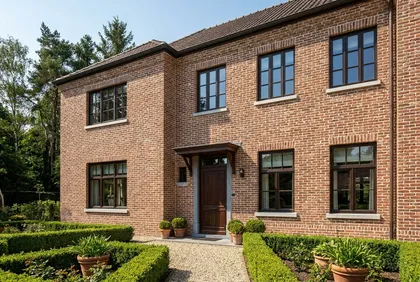
Under a sun-exposed roof, its thermal lag transforms the comfort of upstairs bedrooms in a heatwave, where wool alone gives out.
For the best performance-to-price ratio and an A1 fire class, mineral wool remains a safe bet. And for the lowest lambda in slim thickness, look at PUR / PIR.
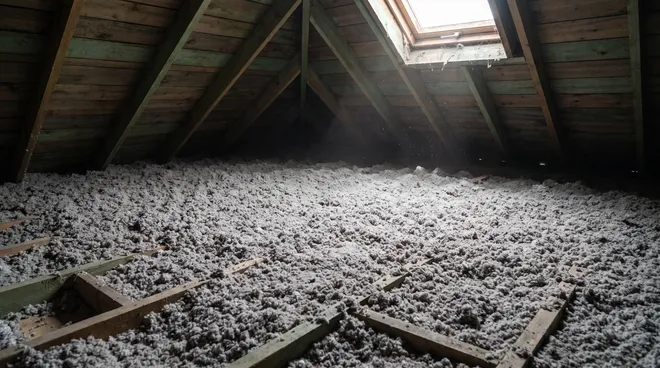
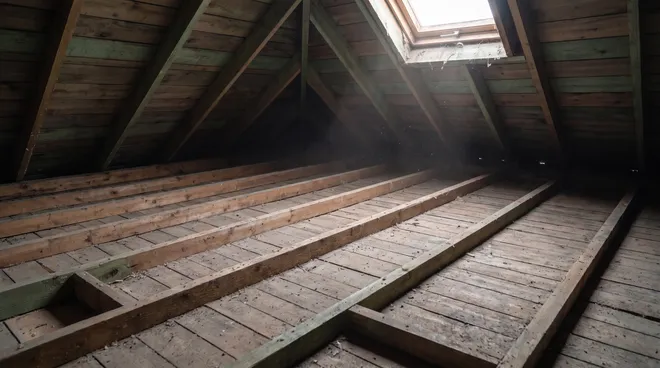
Under a south-facing roof, the upstairs bedrooms became unliveable in summer. We injected cellulose at high density into the slopes and blew the unconverted attic, reaching R = 6. The result: a thermal lag that pushes the heat peak into the evening and a lighter heating bill in winter.
4.5/5 · 2verified reviews
« Isolation de la toiture et des combles. Différence ressentie dès l'hiver suivant. Petit retard de planning, mais résultat à la hauteur. »
« Insufflation des murs creux, rapide et sans dégât. La prime régionale a couvert une bonne part. Maison nettement moins froide. »
Cellulose wins on summer comfort and ecology. Compare it point by point with mineral wool and PUR/PIR, then open the material that interests you.
| Critère | CelluloseVous êtes ici | Mineral woolVoir la gamme → | PUR / PIRVoir la gamme → |
|---|---|---|---|
| Conductivity λ | 0.038–0.042 | 0.032–0.040 | 0.022–0.028 |
| Thermal lag / summer comfort | Excellent (~10–12 h) | Low to medium | Low |
| Ecology / embodied energy | Bio-based, very low | Average | High (petrochemicals) |
| Fire behaviour | Euroclass B–C | A1 non-combustible | Combustible (B–E) |
| Moisture behaviour | Hygroscopic, regulates | Sensitive if unprotected | Insensitive (closed) |
| Indicative price | €€ — intermediate | The gentlest | €€€ — higher |
| Ideal for | Attics, summer comfort, eco | Tight budget, fire safety | Slim thickness, floors |
Compare cellulose, wools, PUR/PIR and bio-based insulants at a glance, to suit your project and budget.
See all the materials →The best performance-to-price ratio with an A1 non-combustible fire class. The safe bet for attics and walls.
Compare with wool →The lowest lambda for the slimmest thickness. Ideal where every centimetre counts (floors, flat roofs).
Discover PUR/PIR →Unconverted or converted attics: blown cellulose gives its best here. The most cost-effective job.
See attic insulation →Injected at high density into the slope cavities, cellulose insulates with no thermal bridge and takes care of summer comfort.
Insulate the slopes →An overview of our insulation solutions in Belgium: attics, walls, roof, floors, materials, installation and grants.
Back to the insulation guide →The price depends on the target thickness (R), the technique (blowing or injection) and site access. Here are some benchmarks for installed cellulose, with grants deductible afterwards.
See the detailed insulation price list →* Indicative ranges per m² of cellulose installed, excluding specific set-ups. A costed estimate is provided with your free quote.
In winter, yes: its lambda (0.038–0.042) sits at the level of good mineral wools. But it’s above all in summer that it stands out: its high thermal capacity creates a thermal lag of around 10 to 12 hours, which slows heat far better than light wool and keeps attics cool.
Thermal lag is the time it takes outdoor heat to cross the insulant. With cellulose, the afternoon heat peak only reaches the inside late in the evening, heavily dampened. That’s what makes loft bedrooms liveable in a heatwave, where wool alone quickly gives out.
Settling only happens if the installed density is insufficient. Installed at the right density by a certified applicator (blowing in attics, high-density injection in cavities), cellulose stays stable over time. That’s why the choice of installer is decisive.
Yes. It is treated with borate salts, which make it flame-retardant (it doesn’t ignite, it chars slowly) and antifungal: it resists mould and doesn’t attract rodents or insects. Its fire class nevertheless stays below that of rock wool.
It’s one of the most virtuous bio-based insulants: made from recycled paper, lightly processed and often produced locally, it has one of the lowest embodied energies on the market. A consistent choice for a durable renovation and an eco-conscious approach.
Grants depend on the performance achieved (resistance R), not on the material: attic insulation at R = 6 qualifies, depending on your region and income, for a renovation grant and the 6% VAT rate for homes over ten years old. We handle the paperwork for you.
Free on-site survey, grants calculated, a single point of contact. Describe your project in under a minute.