« Isolation de la toiture et des combles. Différence ressentie dès l'hiver suivant. Petit retard de planning, mais résultat à la hauteur. »
Thomas R.Mons
An unused loft (an unconverted attic) is heat escaping through your roof for nothing. Blowing insulation across the loft floor is the quickest move (just a few hours), the cheapest per m² and one of the most effective. If your loft is unused, this is where to start.
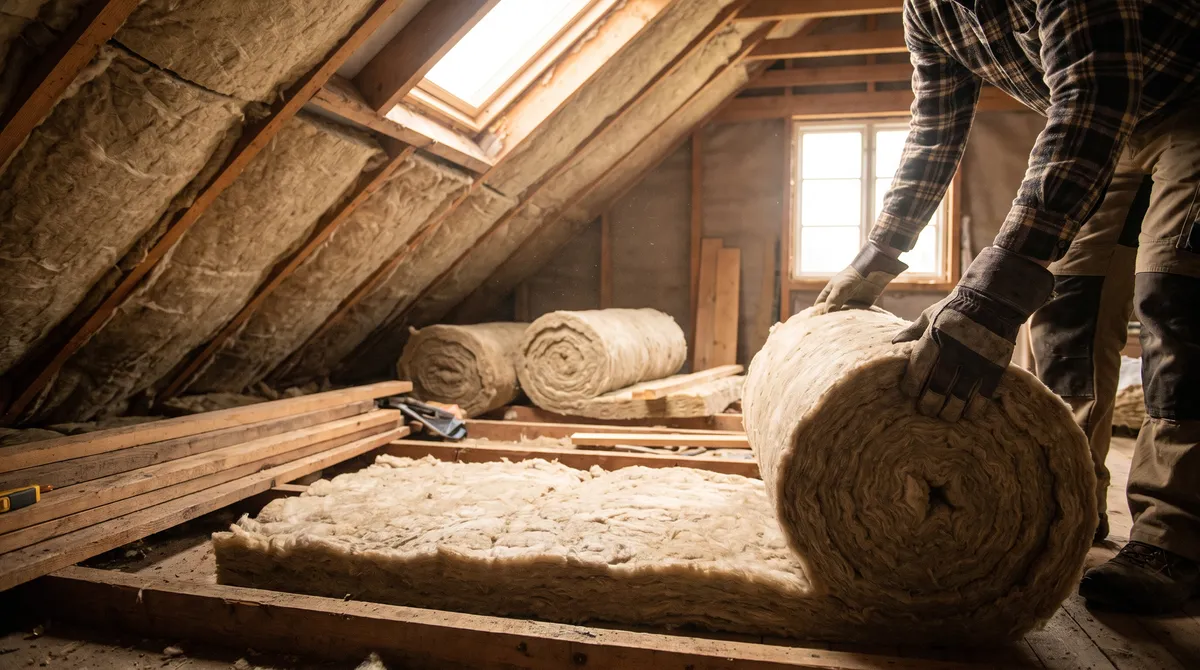
The principle is simple: you insulate the loft floor, not the slope of the roof.
A hose blows cellulose (recycled paper) or wool (glass, rock) in loose flakes across the loft floor. Fast, even, no cutting required.
Rolls of mineral wool unrolled across the floor. Slower than blowing but lets you walk on it (with a walkway board).
To reach R ≥ 6 (above the grant threshold), 25 to 35 cm of cellulose or wool is blown in, depending on the material’s lambda.
Cellulose wadding is made from recycled newsprint. Excellent carbon footprint, good summer comfort (thermal lag), treated against fire and mould.
The generous depth of blown insulation delivers excellent thermal lag: the loft and the ceiling stay cool in summer.
Blowing makes the loft non-walkable (apart from a walkway). If the loft is converted or due to be, see roof insulation instead.
* Indicative values. The exact thickness is calculated during the on-site survey.
Blowing is unbeatable on speed and cost, but it has one condition: the loft must not be in use.
If your loft is unused, blowing is the first move to make.
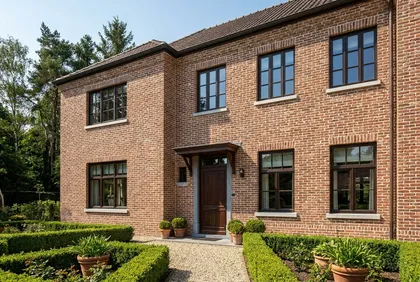
The ideal case: an empty attic, an access hatch and a few hours of blowing. The thermal gain is immediate.

A bit of wool laid 30 years ago? We blow over it to top up the depth. No need to remove the old layer.

A building’s loft is often unused. Blowing covers the whole building in a single day.
If your loft is lived in or meant to be, blowing isn’t suitable. See roof insulation (between or over the rafters). And compare the materials to pick the right insulant.
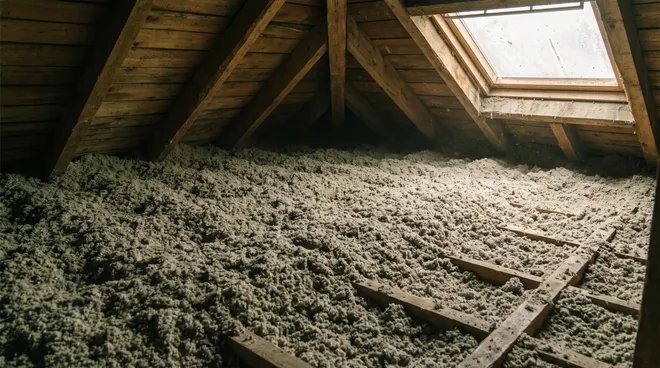
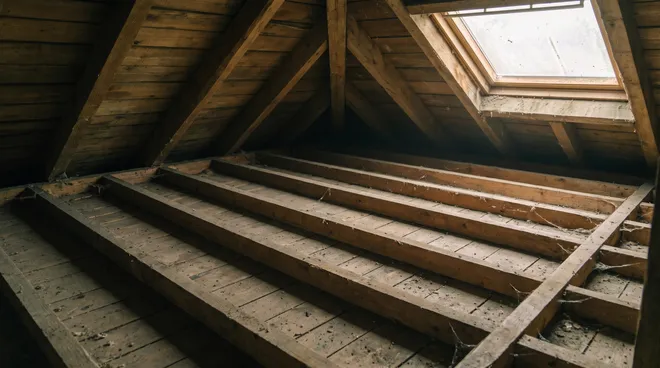
An 80 m² unused loft, never insulated. We blew in 30 cm of cellulose in 3 hours. The top-floor ceiling temperature rose 4 °C in the first winter. Cost: around €1,600 before grants.
4.5/5 · 2verified reviews
« Isolation de la toiture et des combles. Différence ressentie dès l'hiver suivant. Petit retard de planning, mais résultat à la hauteur. »
« Insufflation des murs creux, rapide et sans dégât. La prime régionale a couvert une bonne part. Maison nettement moins froide. »
The choice depends on how your loft is used.
| Critère | Loft blowingVous êtes ici | Loft rollsVoir la gamme → | Roof insulationVoir la gamme → |
|---|---|---|---|
| Price | The gentlest | Gentle | Higher |
| Speed | A few hours | 1–2 days | 2–5 days |
| Loft walkable | No | With a board | Yes (converted) |
| Loft convertible | No | No | Yes |
| Performance | Excellent | Very good | Very good |
| Summer comfort | Excellent (cellulose) | Good | Variable |
| Best for | Unused loft, budget | Unused loft + access | Converted loft |
For converted lofts: insulation between or over the rafters.
See the roof →After the loft, the walls are the second priority.
See the walls →Cellulose, glass wool, rock wool: compare them.
Compare →The floor accounts for 10% of losses. Often done from the cellar.
See the floor →Insulate before installing a heat pump — so you don’t oversize it.
See heat pumps →An overview of our insulation solutions in Belgium.
Back to the guide →Blowing is the cheapest insulation move per m².
See detailed insulation pricing →* Indicative ranges per m² fitted. The exact price depends on access and thickness.
No, not directly on the insulation. A walkway (boards on the joists) can be planned to reach the hatch, the meter or the ventilation unit. The rest stays covered.
Not necessarily. If the old insulation is dry and in good condition, we blow over it to top up the depth. If it’s damp or mouldy, we remove it first.
Cellulose wadding is treated with a flame retardant (boron salt). It does not spread flame and chars slowly. It meets fire standards for use in lofts.
Slightly (5–10% over the first few years). That’s why we blow with a built-in settling margin. Performance stays compliant over time.
For a typical house (60–100 m² of loft), blowing takes 2 to 4 hours. No disturbance for the neighbours, no structural work.
Regional grants apply as soon as the U-value meets the threshold (Umax 0.24 W/m²K, easy with blowing). VAT at 6% on renovation. Blowing is the most heavily subsidised move relative to its cost.
Free loft visit, choice of material, grants calculated. Describe your project in under a minute.