« Isolation de la toiture et des combles. Différence ressentie dès l'hiver suivant. Petit retard de planning, mais résultat à la hauteur. »
Thomas R.Mons
The roof is the leading source of heat loss in a Belgian home. Insulating the roof means cutting your heating bill from the very first winter, improving comfort in summer and winter alike, and adding value to your property. From the inside, from the outside (sarking) or by blowing insulation into the attic: we choose the method that fits your roof.
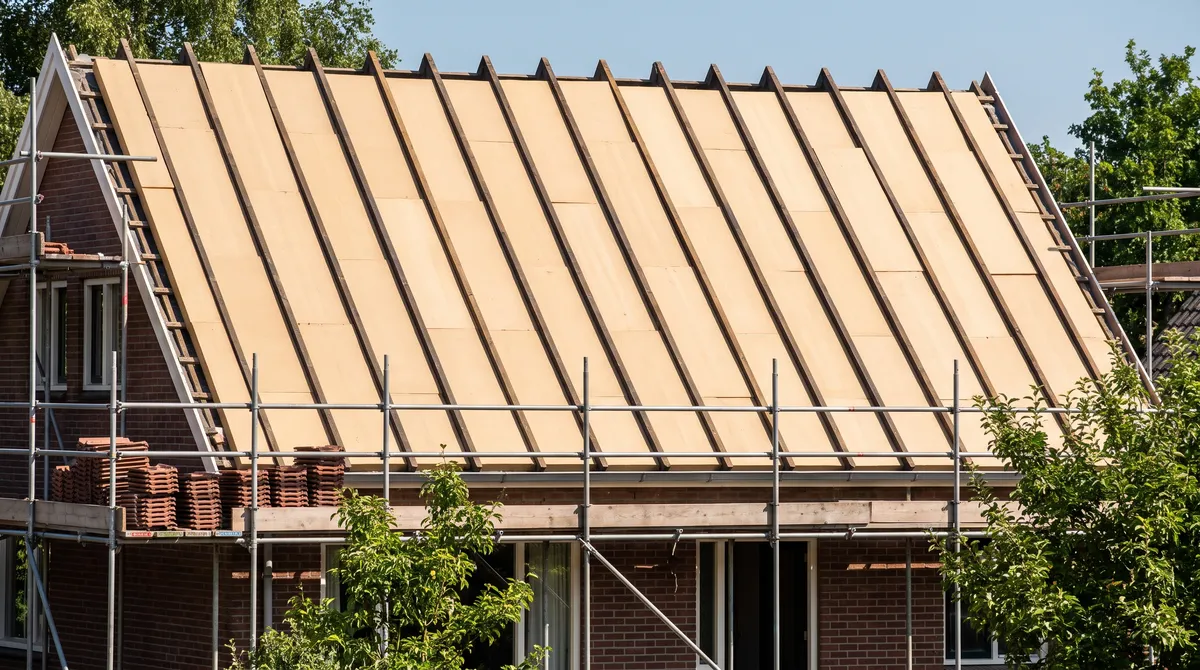
Each method has its strengths depending on whether the attic is converted or unused.
Panels or rolls of wool (glass, rock) or PUR placed between the rafters, beneath the roof covering. The standard method when renovating a converted attic.
Rigid panels laid above the rafters, beneath the new roof covering. Eliminates thermal bridges but requires redoing the roof covering.
Cellulose or wool blown onto the floor of an unconverted attic. The most economical and fastest method.
To reach Umax 0.24 W/m²K (the grant threshold), you need a resistance R of at least 5 m²K/W — that is 18–24 cm of wool or 12–16 cm of PUR.
Thickness depends on the material: PUR (λ 0.022) is thinner than wool (λ 0.035). We optimise according to the space available.
Rock wool is non-combustible (class A1). PUR is combustible but treated with a flame retardant. The choice matters for fire safety.
* Indicative values. The exact thickness and material are determined during the on-site survey.
Two main approaches, each with its strengths.
The choice depends on the condition of the covering and how the attic is used.
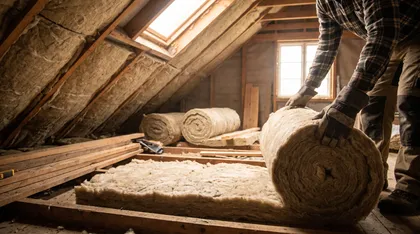
Insulation between and under the rafters is the standard. We fit the insulation, the vapour barrier and the finish in a single campaign.
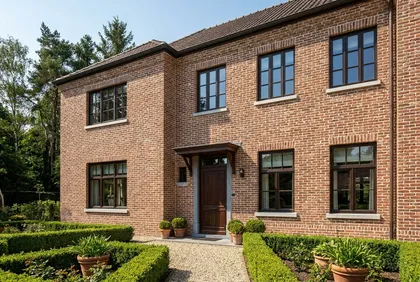
Blowing cellulose or wool onto the attic floor: the fastest and cheapest solution. Done in a few hours.
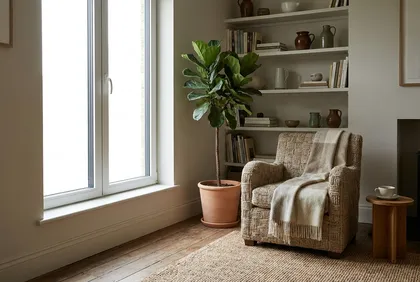
If the roof covering is at the end of its life, sarking combines insulation and roof renewal in a single job. Maximum performance.
After the roof, the walls are the second source of heat loss (25%). And for the floor, see floor insulation.
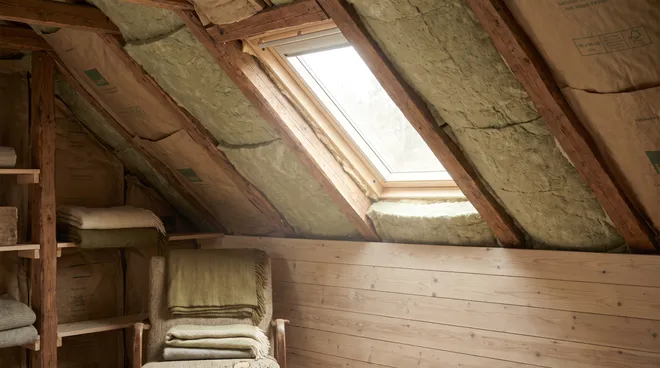
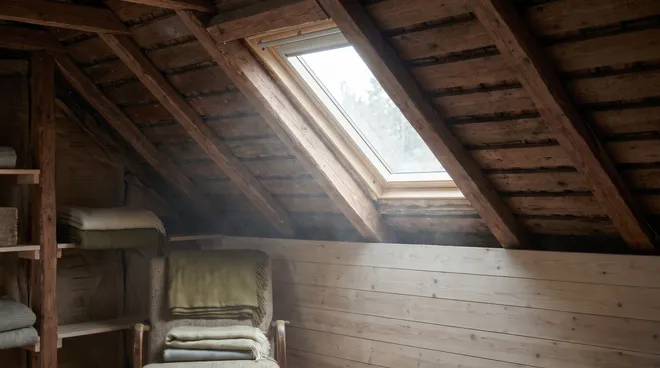
A 1960s house with a converted but uninsulated attic — cold in winter, an oven in summer. We fitted 18 cm of rock wool between and under the rafters with a vapour barrier in 3 days. Comfort transformed from the very first winter.
4.5/5 · 2verified reviews
« Isolation de la toiture et des combles. Différence ressentie dès l'hiver suivant. Petit retard de planning, mais résultat à la hauteur. »
« Insufflation des murs creux, rapide et sans dégât. La prime régionale a couvert une bonne part. Maison nettement moins froide. »
Three methods, three situations. The choice depends on your attic and your roof covering.
| Critère | Between raftersVous êtes ici | SarkingVoir la gamme → | Blown-inVoir la gamme → |
|---|---|---|---|
| Performance | Very good | The best | Very good |
| Price | Mid-range | The highest | The gentlest |
| Duration of work | 2–4 days | 1–2 weeks | A few hours |
| Converted attic | Yes | Yes | No (unused attic) |
| Covering kept | Yes | No (redone) | Yes |
| Thermal bridges | Reduced | Eliminated | Reduced |
| Ideal for | Standard renovation | Covering to be redone | Unused attic, budget |
Blown-in is the fastest and most economical solution for an unconverted attic.
See blown-in →After the roof, the walls are the second priority (25% of heat loss).
See wall insulation →Wool, PUR, cellulose, wood fibre: compare the insulation materials.
Compare materials →Roof sarking is the counterpart of EWI for walls: insulation from the outside.
See EWI →Insulate first, then size the heat pump to an efficient home.
See heat pumps →An overview of our insulation solutions in Belgium.
Back to the insulation guide →The price depends on the method, the material and the surface area. Here are benchmarks per m² installed.
See detailed insulation prices →* Indicative ranges per m² installed. The exact price depends on the configuration and accessibility.
With the roof, almost always. It is the leading source of heat loss (~30%) and often the best cost-to-gain ratio. Then the walls (~25%), then the floor (~10%).
Yes, on the warm side (interior). The vapour barrier stops indoor humidity from penetrating the insulation and condensing inside it. Without one, you risk mould and degraded insulation.
To reach the grant threshold (Umax 0.24 W/m²K), you need roughly 18–24 cm of wool (R ≥ 5) or 12–16 cm of PUR. We calculate precisely during the survey, according to the chosen material.
If the covering needs redoing, yes: you combine both jobs. If the covering is in good condition, interior insulation is the more sensible choice.
Yes, considerably. The insulation blocks the sun’s heat in summer just as it retains indoor heat in winter. Wood fibre offers the best summer comfort thanks to its thermal phase shift.
In Wallonia and Brussels, significant grants exist for roof insulation reaching Umax 0.24 W/m²K. The amount depends on your income and the insulated surface. VAT at 6% for renovation.
Free technical visit, choice of material and method, grants calculated. Describe your project in under a minute.