« Devis clair, sans surprise, primes comprises. Un seul interlocuteur du début à la fin. Je recommande sans hésiter pour le photovoltaïque. »
Pierre M.Tournai
A smart charger pairs your solar panels with your electric vehicle. In “solar boost” mode, it charges only from the solar surplus: your car runs on free energy. In the evening or on cloudy days, it tops up from the grid. The best use of your panels.
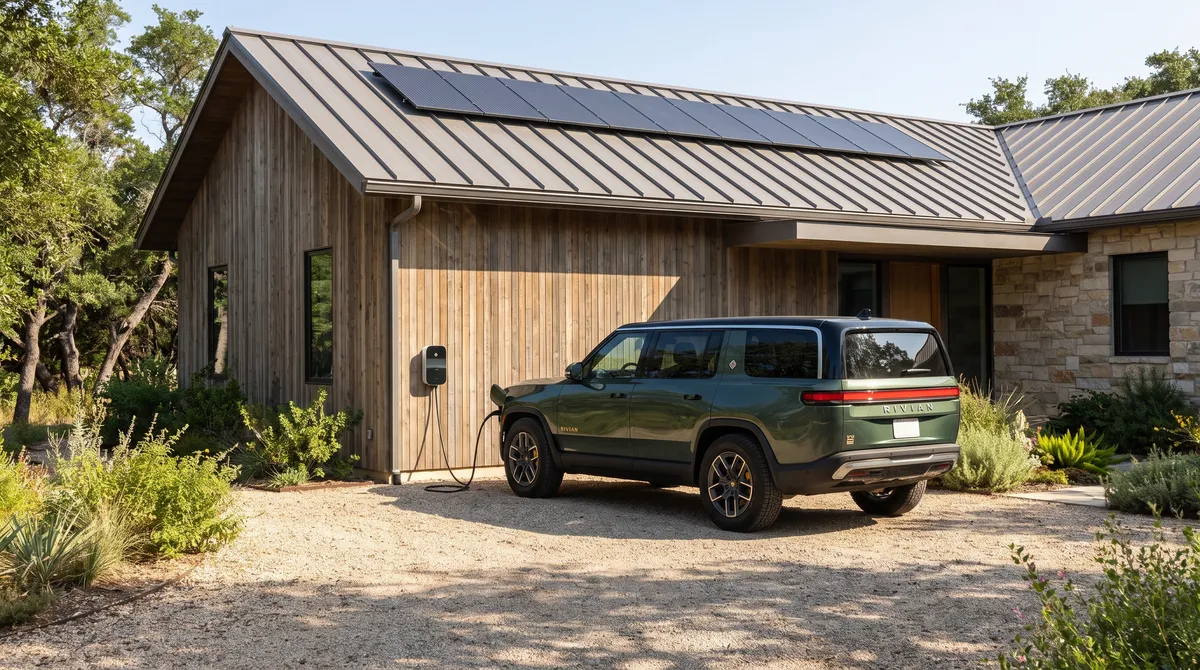
The numbers that matter for a smart EV charger, installed by our teams.
7.4 kW single-phase (230 V, 32 A), 11 or 22 kW three-phase. For residential use, 7–11 kW is enough: a night of charging adds 200–400 km of range.
The charger communicates with the inverter and charges only from the available solar surplus. No surplus = no charging (or a grid top-up, your choice).
Schedule charging hours, track consumption, switch on solar mode — all from your smartphone.
Built-in or dedicated residual-current protection at the panel. The charger cuts out in the event of a fault — compliant with RGIE standards.
Identification by badge or app: separate private and business consumption (the tax benefit for a company EV).
Standard European Type 2 socket, compatible with every EV sold in Belgium. Built-in cable or open socket.
* Indicative values for mainstream-grade chargers. The effective charging power depends on your electrical connection.
The solar charger is the ideal complement to your panels if you drive electric.
Pairing panels + charger is ideal under certain conditions:
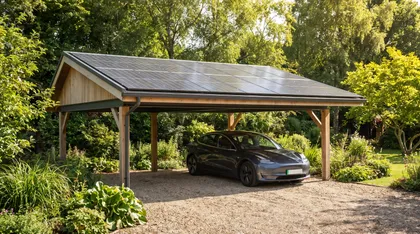
The EV is home when the panels are producing. The solar surplus charges the car for free instead of being exported.

The second vehicle (often used locally) stays home during the day — perfect for absorbing the solar surplus.

The smart charger separates private and business consumption: essential for the EV tax benefit.
If the EV isn’t there during the day, a home battery stores the surplus to charge at night. Otherwise, the solar charger alone is enough. Size it with the right solar kit.
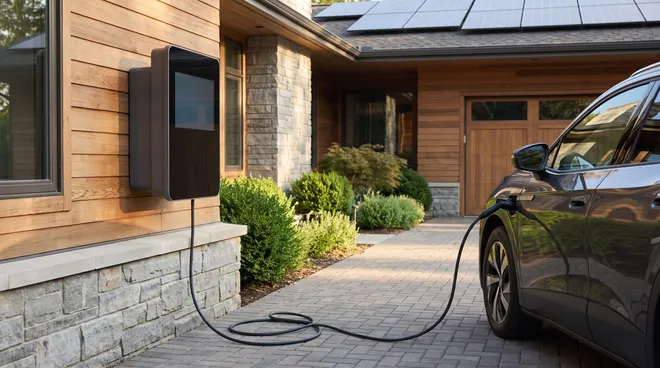
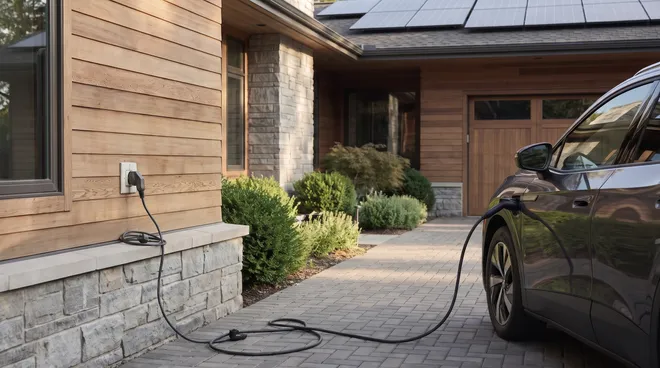
A remote worker with 8 kWp of panels and an EV at home during the day. We installed a 7.4 kW charger with solar boost mode. The result: 90% of the charge comes from the solar surplus. The EV runs on free energy.
5.0/5 · 1verified reviews
« Devis clair, sans surprise, primes comprises. Un seul interlocuteur du début à la fin. Je recommande sans hésiter pour le photovoltaïque. »
Compare the charging options for your EV.
| Critère | Solar chargerVous êtes ici | Standard chargerVoir la gamme → | Public chargerVoir la gamme → |
|---|---|---|---|
| Cost per kWh | Almost free (surplus) | Grid tariff | Commercial tariff |
| Availability | Always (at home) | Always (at home) | Subject to availability |
| Solar control | Yes, built-in | No | No |
| Investment | €800–2,000 | €500–1,200 | €0 |
| EV tax benefit | Yes (badge/app) | Yes (badge/app) | Via invoice |
| Environmental impact | Local green energy | Grid mix | Variable |
| Ideal for | Panels + EV, remote work | EV without panels | Emergency top-ups, long trips |
The solar charger needs panels. Size the kit to cover the EV too.
See the kits →Store the surplus to charge at night if the EV isn’t home during the day.
See the batteries →The charger communicates with the inverter to manage solar charging.
See the inverters →More panels = more surplus for the EV. N-type for the best efficiency.
Compare the types →Check that your roof can hold enough panels to charge the EV as well.
Check my roof →An overview of our solar panels across Belgium.
Back to the solar guide →The price depends on the power, the brand and the complexity of the electrical connection.
See prices for solar kits + charger →* Indicative ranges for an installed charger. The electrical connection may require a panel upgrade.
No, you can install a standard charger without panels. But solar boost mode (charging from the surplus) requires panels and a compatible inverter. Without panels, you charge at the grid tariff.
At 7.4 kW: around 6–8h for a full charge (50 kWh battery). At 11 kW: 4–5h. In solar mode, the power varies with the available surplus — charging is slower but free.
Yes, a 7.4 kW single-phase charger suits the vast majority of residential uses. Over a night, it adds ~200 km of range. Three-phase is only useful if you need frequent fast charges.
Yes. Smart chargers with a badge or app identify the user. Essential for the tax benefit tied to company EVs in Belgium.
Smappee (Belgian, excellent solar pairing), Alfen, Wallbox, Easee. The choice depends on your inverter and your needs (single/three-phase, solar mode, tax benefit). We advise you on the right brand.
The 6% VAT rate applies for renovation (home > 10 years old). Some regions or municipalities offer occasional subsidies for residential chargers. We check your eligibility.
Free connection study, sizing with your panels, verified subsidies. Describe your project in under a minute.