« Devis clair, sans surprise, primes comprises. Un seul interlocuteur du début à la fin. Je recommande sans hésiter pour le photovoltaïque. »
Pierre M.Tournai
Without a battery, your panels’ surplus is fed back to the grid at a low price. A home battery stores the energy produced during the day and releases it in the evening and at night — you raise your self-consumption and gain independence when outages hit.
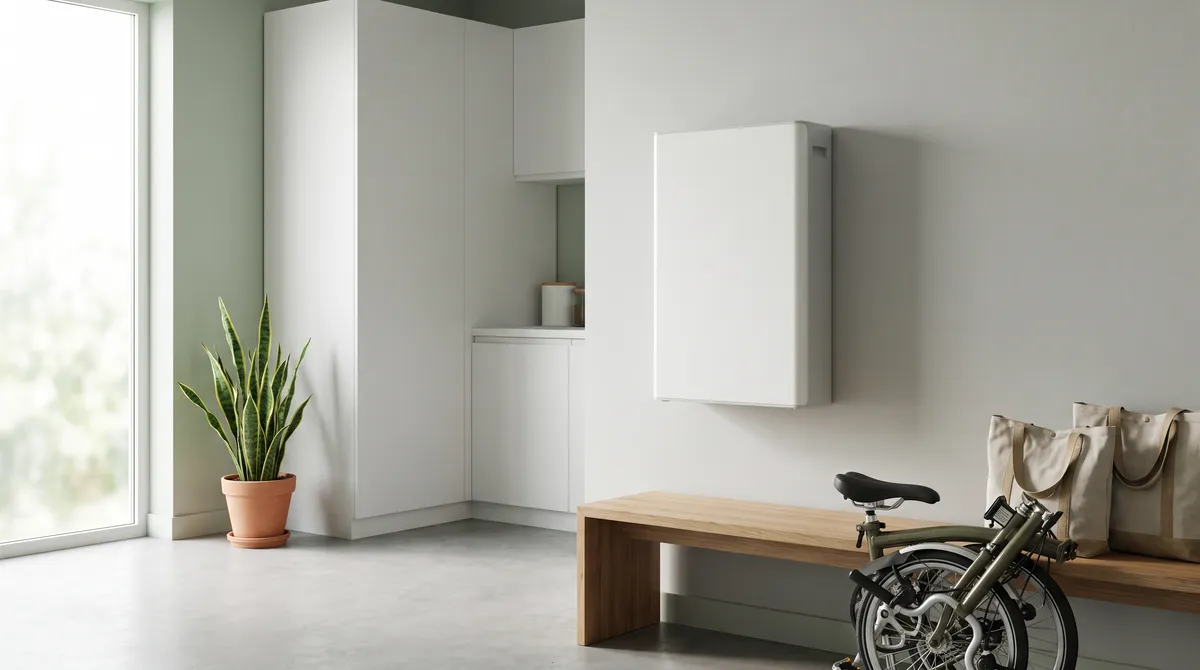
The figures that matter for quality solar storage, sized and installed by our teams. Concrete benchmarks, not marketing.
Capacity is sized to your evening consumption and the size of your installation. For a household, 5 to 10 kWh covers most evenings.
A LiFePO4 lithium battery handles around 6,000 charge/discharge cycles — well over ten years of daily use, while keeping most of its capacity.
Round-trip efficiency (energy out versus energy stored) reaches 90 to 95% on recent lithium batteries — very few losses between charge and discharge.
LiFePO4 discharges almost completely without damage, where older technologies were limited to 50%. The full rated capacity is genuinely usable.
With a hybrid inverter and the backup function, the battery powers your priority circuits during a grid outage — lighting, fridge, internet router.
Lithium iron phosphate chemistry is the most thermally stable for home use. The built-in BMS continuously monitors temperature, voltage and charge.
* Indicative values for mainstream lithium batteries. Real-world performance depends on the model and sizing — confirmed during the survey.
A battery doesn’t make the same sense for everyone. Here, honestly, is where it changes the game and where it deserves a second thought.
It all comes down to when you consume. A few profiles where storage is especially worthwhile:

If most of your consumption falls in the evening and at night, the battery stores the day’s solar production to release it when you need it.

To secure essential circuits (fridge, freezer, internet, lighting) during outages, the backup option takes over in a fraction of a second.
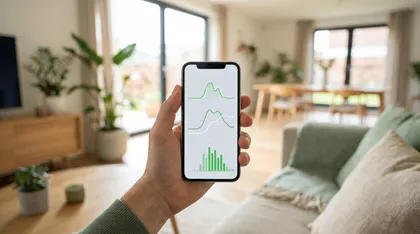
Where injection is poorly valued, self-consuming your surplus through a battery protects the payback of your photovoltaic installation.
A physical battery actually stores your energy; a virtual battery is a grid-based offsetting service. We compare the two against your profile, and size everything with the right lithium battery.
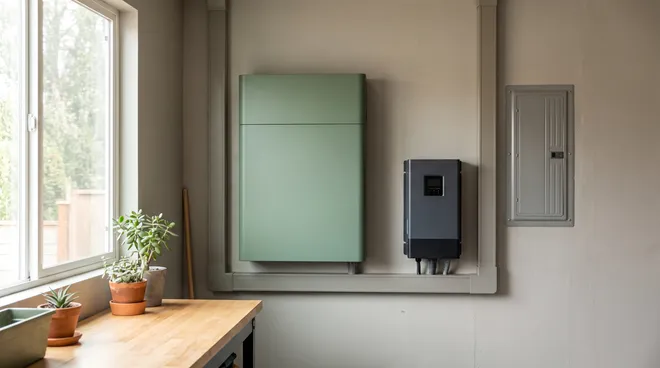
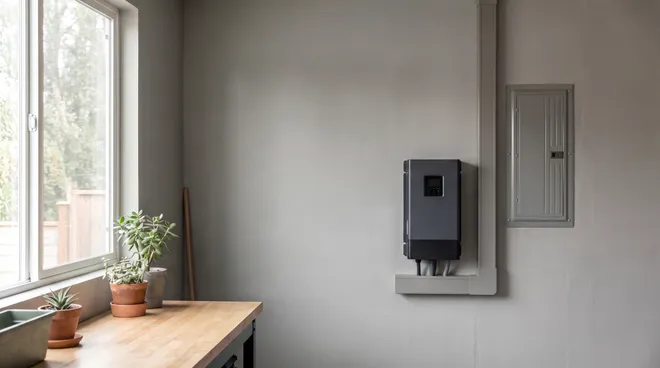
A 6 kWp installation that was injecting half its production to the grid for a few cents. We added a 10 kWh battery with a hybrid inverter and backup function: the midday production now powers the evenings, and priority circuits stay on during outages.
5.0/5 · 1verified reviews
« Devis clair, sans surprise, primes comprises. Un seul interlocuteur du début à la fin. Je recommande sans hésiter pour le photovoltaïque. »
Store physically, subscribe to a virtual battery, or inject without storage: three strategies with different logics. Here’s how they compare.
| Critère | Physical batteryVous êtes ici | Virtual batteryVoir la gamme → | No storageVoir la gamme → |
|---|---|---|---|
| Self-consumption | Strong increase | Indirect (offsetting) | Limited to real time |
| Backup during outages | Yes, with backup | No | No |
| Investment | €€€ — hardware | € — subscription | None |
| Grid independence | The highest | Grid-dependent | Fully dependent |
| Recurring costs | Near zero | Monthly subscription | Prosumer tariff |
| Lifespan | ~6,000 cycles | Contractual service | — |
| Ideal for | Evening use, seeking independence | Smoothed use, no hardware | Small install, daytime use |
The reference chemistry for home storage: stable, durable and fully dischargeable. The heart of your battery.
All about lithium →The hybrid inverter manages panels, battery and grid, and unlocks the backup function. The centrepiece of storage.
See the hybrid inverter →A battery only makes sense with good production. Discover our panel kits sized for storage.
See the solar kits →How much an installed battery costs and how long it takes to pay off based on your consumption.
See the prices →Our full home storage offering: technologies, brands and sizing in one place.
See storage →An overview of our solar panels in Belgium: production, inverters, batteries and incentives on one page.
Back to the solar guide →The price depends on the capacity, the brand and whether a hybrid inverter is included. Here are some benchmarks for installed hardware, before any incentives.
See storage prices & payback →* Indicative ranges for installed hardware. Payback depends on your consumption profile — costed during your free quote.
It depends on your profile. The more you consume in the evening and the lower the injection tariff, the more attractive a battery becomes: it avoids selling cheaply energy you would buy back at a higher price. We cost your real case in the quote, based on your consumption.
We size it to your evening consumption and the size of your installation. A battery that’s too large never fully charges; too small and it saturates before nightfall. For a household, 5 to 10 kWh generally covers most evenings.
Only with the backup option and a compatible hybrid inverter. In that case, the battery switches over in a fraction of a second to your priority circuits (fridge, lighting, internet). Without this option, a standard battery shuts down safely during a grid outage.
Yes, in most cases. Depending on your current inverter, we add a compatible battery or replace the inverter with a hybrid model. We check your installation’s compatibility before proposing the most economical solution.
A LiFePO4 lithium battery handles around 6,000 charge/discharge cycles — well over ten years at one cycle per day. It’s typically warranted for about ten years, keeping most of its capacity at the end of the warranty.
A physical battery actually stores your energy at home and enables backup during outages. A virtual battery is a grid-based offsetting service, with no hardware and no independence. The right choice depends on your profile and the tariff; we compare them together.
Analysis of your consumption profile, precise sizing, verified incentives. Describe your project in under a minute.