« Isolation de la toiture et des combles. Différence ressentie dès l'hiver suivant. Petit retard de planning, mais résultat à la hauteur. »
Thomas R.Mons
Glass wool or rock wool: the most widely installed material in Belgium. Non-combustible (Euroclass A1), affordable, excellent acoustically and vapour-permeable, it insulates attics just as well as timber-frame walls and partitions. We’ll walk you through it so you can choose with full confidence.
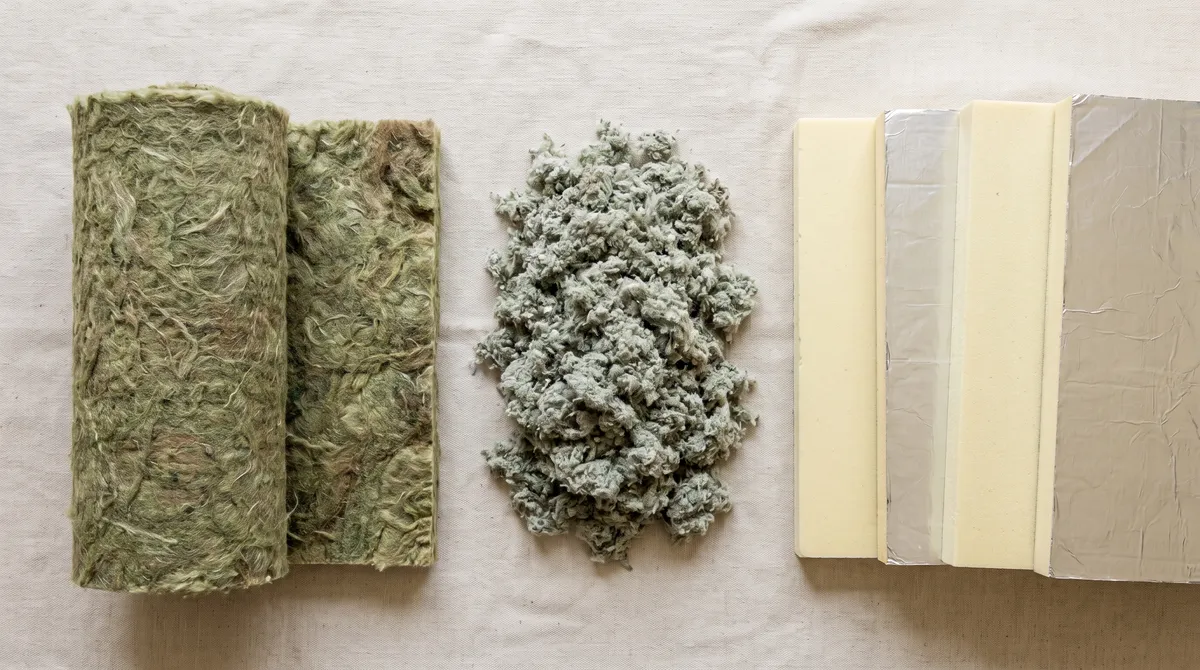
The benchmarks that matter to understand glass wool and rock wool. Concrete figures, not marketing — to pick the right product for the wall you’re insulating.
The lambda value places mineral wool among the good insulants. High-density glass wools drop to 0.032; standard ranges and rock wool sit around 0.035–0.040. The lower the λ, the less thickness you need to hit your target R.
This is the major asset: mineral wool is non-combustible and does not spread flame. Rock wool withstands more than 1000 °C. Ideal around flues, in service shafts and anywhere fire safety comes first.
Its fibrous structure absorbs airborne noise: it’s the reference insulant for partitions, floors between storeys and acoustic comfort. Denser rock wool is even more effective against noise.
Mineral wool lets water vapour migrate: the wall breathes. The flip side — it dislikes liquid water and loses performance when wet. A vapour barrier on the warm side is essential.
Glass wool is light (12–40 kg/m³), rock wool denser (40–70 kg/m³) and more rigid. Density drives long-term stability: too low or poorly installed, the wool can settle and create thermal bridges.
Made from sand and recycled glass (glass wool) or basalt rock (rock wool), it is recyclable and contains some recycled content. Its embodied energy still exceeds that of bio-based insulants.
* Indicative values for common ranges of glass wool and rock wool. The exact λ, density and thickness needed depend on the product and the wall — confirmed during the survey.
No insulant is perfect everywhere. Here, honestly, is where mineral wool excels and where you need to take care during installation.
It comes into its own whenever you want a good, affordable insulant that’s fire-safe and strong on acoustics. A few cases where it shines:
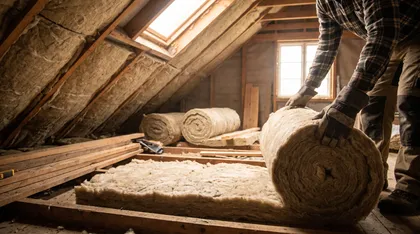
In rolls between rafters or as flakes blown over the floor of an unconverted attic: the most widespread and most affordable way to tackle the number-one heat-loss area.
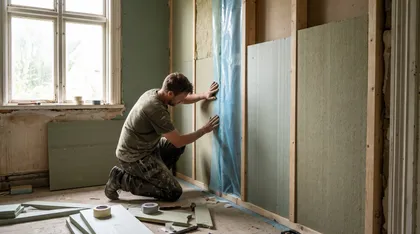
Semi-rigid panels wedge between the studs of a timber or metal frame. The wool follows the structure and delivers thermal and acoustic insulation in a single pass.
For acoustic comfort between rooms or storeys, mineral wool slipped into partitions and floors clearly cuts noise transmission.
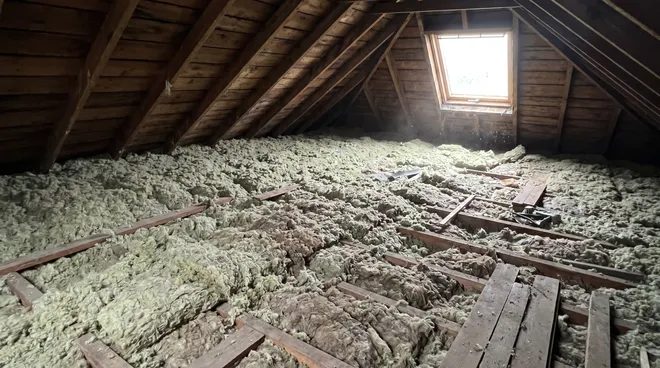
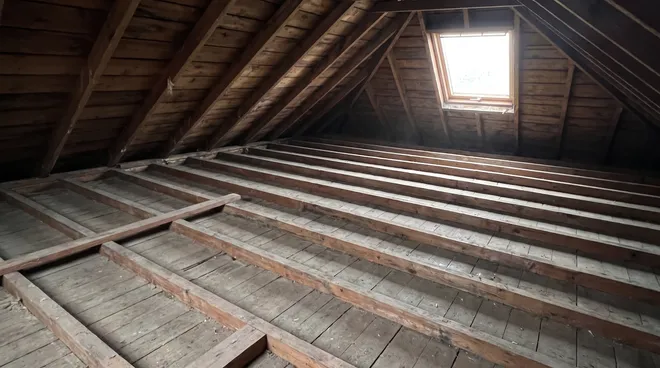
A 1980s house was losing most of its heat through the roof. We blew 30 cm of glass wool flakes over the floor of the unconverted attic, for an R of 7.5 m²K/W. A fast job, with no cutting, and comfort transformed from the very next winter.
4.5/5 · 2verified reviews
« Isolation de la toiture et des combles. Différence ressentie dès l'hiver suivant. Petit retard de planning, mais résultat à la hauteur. »
« Insufflation des murs creux, rapide et sans dégât. La prime régionale a couvert une bonne part. Maison nettement moins froide. »
Mineral wool wins on fire, price and acoustics. Compare it point by point with cellulose and PUR/PIR, then open the sheet that interests you.
| Critère | Mineral woolVous êtes ici | CelluloseVoir la gamme → | PUR / PIRVoir la gamme → |
|---|---|---|---|
| Conductivity (λ) | 0.032–0.040 | 0.038–0.042 | 0.022–0.028 |
| Reaction to fire | Non-combustible A1 | Treated (B-s2) | Combustible |
| Acoustics | Very good | Very good | Poor |
| Ecology | Average | Bio-based | Petrochemical |
| Indicative price | The gentlest | Intermediate | €€€ — high |
| Moisture resistance | Sensitive (vapour barrier) | Sensitive | Very good |
| Ideal for | Attics, walls, partitions | Attics, summer comfort | Slim thickness, floors |
An overview of insulants: mineral wool, cellulose, PUR/PIR, bio-based. Compare λ, fire, ecology and price on one page.
See all the materials →The bio-based insulant made from recycled paper: excellent summer comfort and a good environmental footprint, with comparable acoustics.
Compare with cellulose →The best λ on the market for the slimmest thickness, and insensitive to moisture — but pricier and combustible.
Discover PUR/PIR →The roof, the top heat-loss area. See how mineral wool is installed there, in rolls or blown.
See roof insulation →Frame walls, from the inside or the outside: where and how mineral wool fits in.
See wall insulation →An overview of our insulation solutions in Belgium: walls, materials, techniques, grants and 6% VAT.
Back to the insulation guide →The price depends on the type of wool, the density, the thickness and the installation method (rolls, panels or blowing). Here are some benchmarks for mineral wool supplied and installed.
See the detailed insulation pricing →* Indicative ranges per m² installed, excluding heavy preparation. A costed estimate is provided with your free quote.
Glass wool is lighter and often a touch better thermally (λ down to 0.032), ideal for attics and large areas. Rock wool is denser, more rigid and even better on acoustics and fire — preferred for partitions, floors and areas exposed to heat. Both are non-combustible (Euroclass A1).
Today’s mineral wools are not classified as carcinogenic: their fibres are bio-soluble. During installation they remain irritating to skin and airways, hence the use of PPE (gloves, mask, goggles). Once in place behind a vapour barrier and a finish, they pose no everyday risk.
Yes, in nearly all cases. Mineral wool lets water vapour through and loses most of its performance when wet. A vapour barrier on the warm side (interior) stops the home’s vapour from condensing in the insulant. It’s a non-negotiable step for durability.
A wool of good density, correctly installed and held in place, does not settle significantly. Settling occurs with overly light products, badly fitted or exposed to moisture. For attic blowing, we respect the manufacturer’s mass per m² to guarantee the R over time.
To reach the levels required by grants, we aim for an R of at least 4.5 to 6 m²K/W. That corresponds to about 20 to 30 cm of wool depending on the product’s λ. In an unconverted attic, blowing makes it easy to reach these thicknesses without much extra cost.
Grants depend on the performance achieved (the R coefficient), not on the material. Compliant mineral wool insulation qualifies, depending on your region and income, for a renovation grant and the 6% VAT rate for homes over ten years old. We handle the paperwork for you.
Free on-site survey, grants calculated, a single point of contact. Describe your project in under a minute.