« Isolation de la toiture et des combles. Différence ressentie dès l'hiver suivant. Petit retard de planning, mais résultat à la hauteur. »
Thomas R.Mons
The go-to technique in Belgium for the post-war housing stock. Most of our homes have a cavity wall (two skins separated by an air gap). We fill that cavity with a loose-fill insulant, through small holes that are then sealed: no loss of living space, no change to the facade, and transformed comfort the very next day.
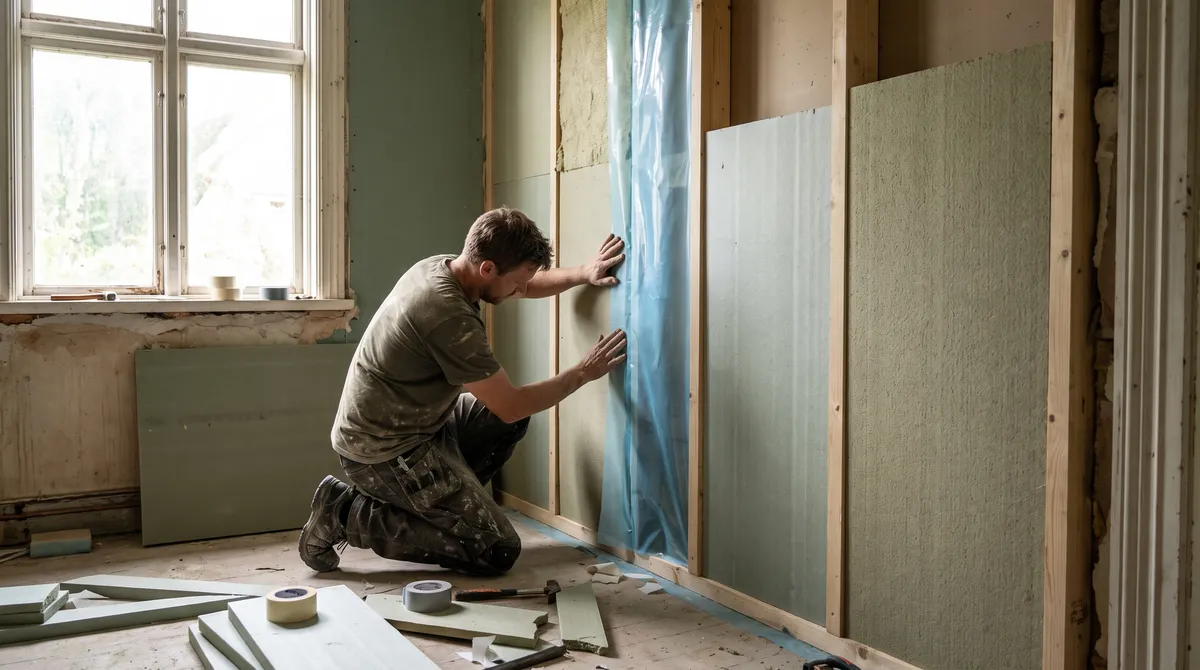
The hard facts of a well-executed cavity wall injection, checked by endoscope before and after. Useful numbers, not marketing.
A 5 to 8 cm cavity filled with a loose-fill insulant delivers a resistance R of around 1.5 to 2. An uninsulated cavity wall can lose up to 25% of the home’s heat: the gain in comfort is immediate and measurable on the bill.
Injection assumes a genuine, continuous cavity. We check its presence and width (3 cm minimum, ideally 5 cm and more) by endoscope before any quote. Without a usable cavity, we steer towards internal or facade insulation.
The camera also checks the state of the cavity: cleanliness, no mortar debris bridging it, and above all no damp or rising moisture. A damp cavity must be treated first: we never inject into a wet wall.
Three families depending on the wall: EPS beads or pearls (the most common, water-repellent), blown mineral wool (non-combustible), or a filling foam. The choice is made during the diagnosis, depending on the width and state of the cavity.
We drill a grid of small holes in the joints of the facade, inject the insulant under controlled pressure until completely filled, then seal up with a matching mortar. From the street, the holes are barely visible.
A standard terraced house is treated in a single day, with no heavy scaffolding and no work inside. You live there normally during and after the work.
* Indicative values for a usable cavity of 5 to 8 cm. Real performance depends on the width of the cavity, the insulant chosen and the state of the wall — confirmed after the endoscopic diagnosis.
No technique is universal. Here, honestly, is where cavity injection excels and where you need to look at another solution.
It comes into its own whenever there is a sound, usable cavity — the case for the vast majority of post-war Belgian homes. A few ideal situations:
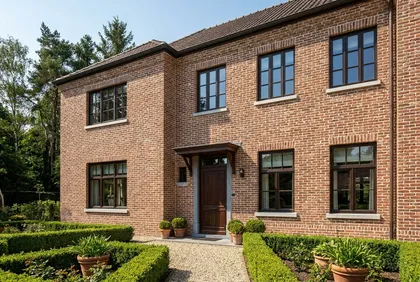
The textbook case: two brick skins separated by an air gap that was never insulated. Injection transforms comfort without touching the character of the facade.
When you want the most savings for the smallest investment, injection is the first move to make before any other energy renovation.

Facing brick, a listed home or simply a fine facade: injection insulates without hiding it, where render-finished exterior insulation would be ruled out.
If the diagnosis reveals a solid wall or an unusable cavity, we switch to internal wall insulation or to facade insulation. We guide you free of charge after the camera check.
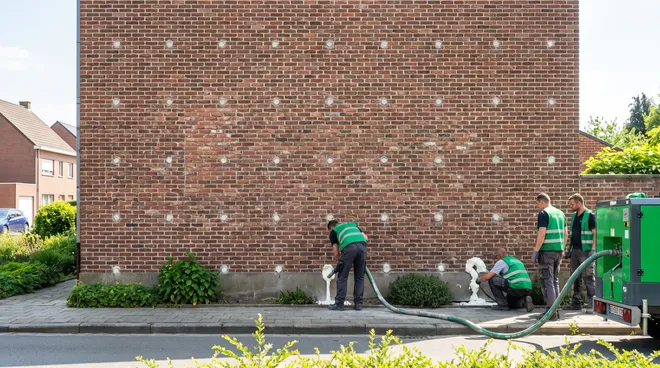
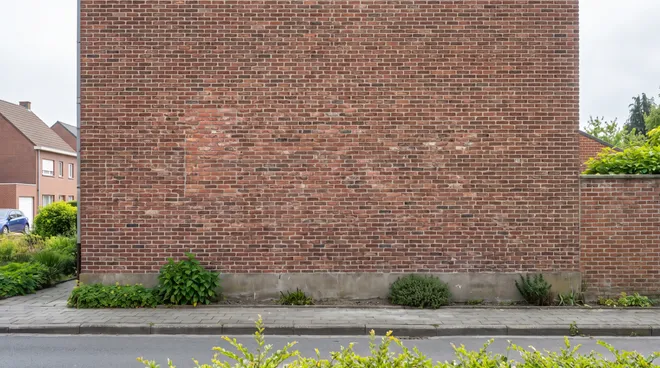
The owners complained of cold walls and a boiler that ran endlessly. The endoscopy confirmed a clean, dry 6 cm cavity. We injected EPS beads in a day, with no scaffolding: from the very next winter, the walls no longer pulled in the cold and the thermostat dropped a notch.
4.5/5 · 2verified reviews
« Isolation de la toiture et des combles. Différence ressentie dès l'hiver suivant. Petit retard de planning, mais résultat à la hauteur. »
« Insufflation des murs creux, rapide et sans dégât. La prime régionale a couvert une bonne part. Maison nettement moins froide. »
Injection wins on price, speed and keeping the facade intact. Compare it point by point with internal wall insulation and render-finish insulation, then open the solution that suits you.
| Critère | Cavity injectionVous êtes ici | Internal wall insulationVoir la gamme → | Render insulation (exterior)Voir la gamme → |
|---|---|---|---|
| Indicative price | The gentlest | €€ — intermediate | €€€€ — the most expensive |
| Job duration | ≈ 1 day | A few days | Several weeks |
| Performance achieved | Good (R 1.5–2) | Very good | Excellent |
| Loss of floor space | None | A few cm inside | None (street side) |
| Facade kept | Untouched | Untouched | Covered with render |
| Thermal bridges | Partly addressed | Hard to address | Very well addressed |
| Ideal for | Sound cavity wall, set budget | Solid wall, room by room | Major renovation, facade to redo |
An overview of the techniques: injection, internal, external. Understand which one suits your type of wall.
See all the solutions →The solution for solid walls or those without a usable cavity: an insulating lining fitted room by room.
Discover internal insulation →Exterior insulation wraps the house from the outside: maximum performance and thermal bridges erased, when the facade can be redone.
See facade insulation →EPS, mineral wool, foam: understand the injected insulants and their performance to fit out your cavity well.
Compare the materials →For lofts, floors or cellars, sprayed polyurethane foam complements wall injection and closes off air leaks.
See spray foam →An overview of our insulation solutions in Belgium: walls, roof, floors, grants and 6% VAT on one page.
Back to the insulation guide →Injection is one of the cheapest insulation methods per m²: the job is fast and needs neither structural work nor finishes. Here are some benchmarks for an injected cavity, with grants accounted for separately.
See the detailed insulation price guide →* Indicative ranges per m² of wall treated, excluding diagnosis and special cases. A firm figure is given after the free endoscopic check.
The vast majority of Belgian homes built after the war have a cavity wall: two brick skins separated by an air gap. We confirm it by endoscopy — a small hole and a camera are enough to measure the width of the cavity and check it is clean and dry. This diagnosis is done before any quote.
No. We drill small holes of 14 to 18 mm in the mortar joints, in a regular grid, then seal them with a mortar matched to the colour of the joints. From the street, the holes are virtually invisible once the job is finished.
A standard terraced house is treated in a single day, with no heavy scaffolding and no work inside. You live there normally during and after the work, with no dust and no major disruption.
Three families depending on your wall: EPS beads or pearls (the most common, water-repellent and stable), blown mineral wool (non-combustible) or a filling foam. The choice is decided during the diagnosis, depending on the width and state of the cavity.
We never inject into a damp cavity: any leak or rising damp must be treated first. And if the wall is solid or its cavity unusable, we steer you towards internal or external insulation. The camera diagnosis settles it free of charge.
A specific regional grant rewards cavity wall insulation carried out by a contractor, and the VAT rate drops to 6% for homes over ten years old. Depending on your region and income, the share covered can be significant — we put the file together for you.
Free endoscopic diagnosis, grants calculated, a single point of contact. Describe your home in under a minute.