« Isolation de la toiture et des combles. Différence ressentie dès l'hiver suivant. Petit retard de planning, mais résultat à la hauteur. »
Thomas R.Mons
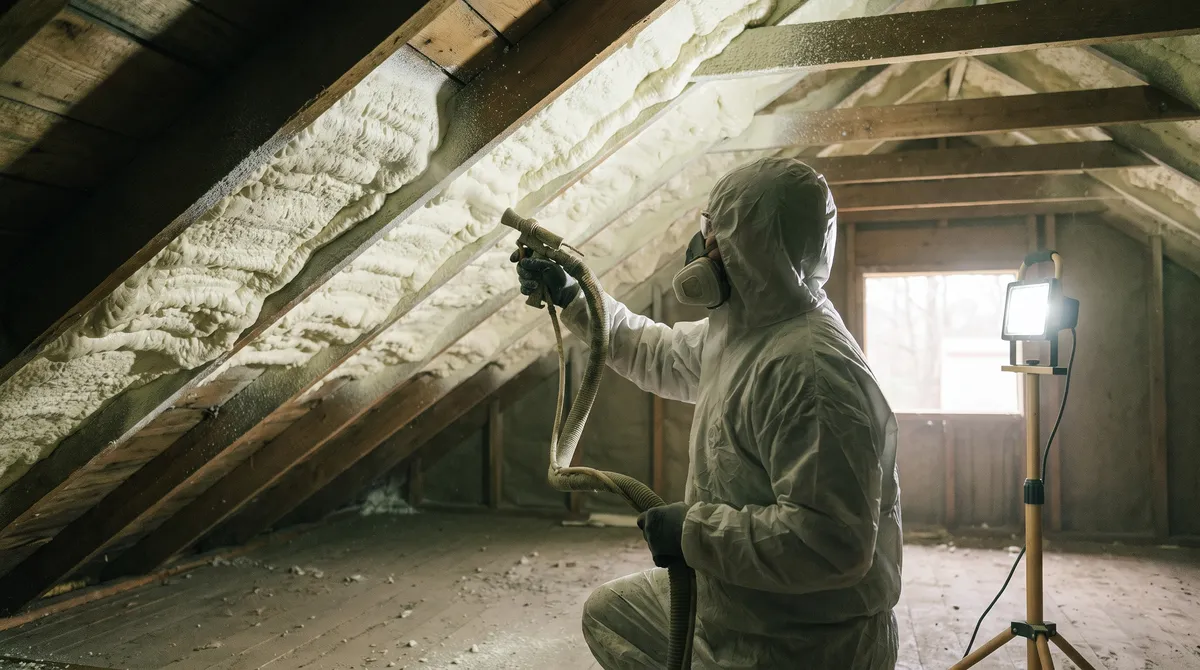
Polyurethane is sprayed on as a liquid, expands, hardens in seconds and fills the tiniest gap. The result is a single-piece insulating envelope, with no joints and no thermal bridges, perfect on uneven substrates and hard-to-reach areas where boards simply won’t hold.
The hard facts about polyurethane foam sprayed by a certified installer. Useful figures for comparison, not promises.
Polyurethane offers one of the lowest lambda values on the market. In practice, you reach a high thermal resistance with a slim thickness — invaluable under a roof or in attics where every centimetre counts.
Sprayed in one continuous pass, the foam forms a single-piece envelope. It eliminates the air leaks and thermal bridges that drag down conventional board insulation, exactly where heat loss builds up.
Closed-cell foam is dense and structural: it blocks water and vapour, stiffens the substrate and delivers the best performance per centimetre. The go-to choice for cellars, crawl spaces and floors.
Lighter and more affordable, open-cell foam lets vapour migrate and improves acoustics. Ideal on interior walls and under roofs when managing moisture is the priority.
Old timber frames, vaults, ducting, warped surfaces: the foam follows shapes that boards can’t cover. No cutting, no residual gaps behind the insulation.
Spraying calls for specific equipment and know-how: dosing the components, controlling thickness, ventilating the site and managing cure time. Reserved for trained, approved installers.
* Indicative values depending on the formulation (closed or open cell), the thickness sprayed and the substrate. Exact performance is calculated during the site survey.
No insulant is perfect everywhere. Here, honestly, is where sprayed PUR foam makes the difference and where another solution will fit better.
It comes into its own whenever continuity, airtightness and tricky substrates are in play. A few cases where it excels:

Between rafters and over warped surfaces, the foam fills everything with no thermal bridge. Ideal in converted and hard-to-reach attics.

In closed-cell form, the foam insulates under slabs and cellar ceilings while also blocking ground moisture.

On a warped substrate cluttered with services, spraying covers without any cutting and removes the gaps behind the insulation.
To fill an existing wall cavity without opening it up, cavity injection is often the better fit. And to compare all the options, browse the insulation materials.
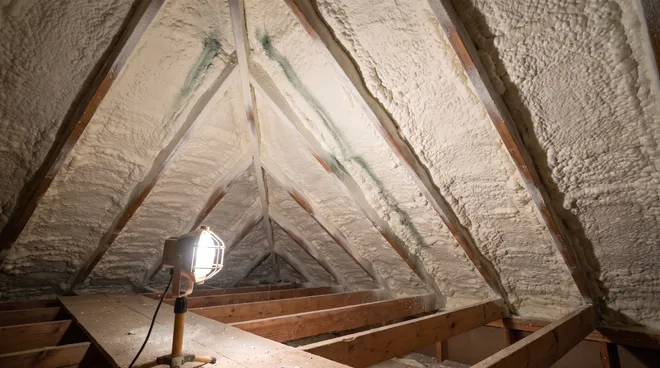
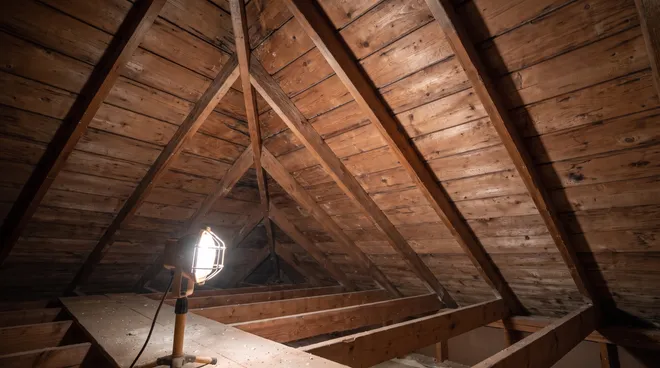
An irregular roof frame ruled out a clean board installation. We sprayed 12 cm of closed-cell PUR foam between and under the rafters: a continuous, airtight envelope with not a single thermal bridge. Comfort in both summer and winter changed from the very first season.
4.5/5 · 2verified reviews
« Isolation de la toiture et des combles. Différence ressentie dès l'hiver suivant. Petit retard de planning, mais résultat à la hauteur. »
« Insufflation des murs creux, rapide et sans dégât. La prime régionale a couvert une bonne part. Maison nettement moins froide. »
PUR foam wins on continuity, airtightness and difficult substrates. Compare it with cavity injection and the full range of materials, then open the path that suits you.
| Critère | Sprayed PUR foamVous êtes ici | Cavity injectionVoir la gamme → | Insulation materialsVoir la gamme → |
|---|---|---|---|
| Indicative price | €€€ — higher | The gentlest | €€ — by material |
| Continuity / airtightness | Perfect, no joints | Good in the cavity | Varies with installation |
| Performance per cm | λ 0.022, the best | λ 0.035 or so | Depends on the material |
| Uneven substrates | Hugs any contour | Closed cavity required | Cutting needed |
| Moisture management | Barrier (closed cell) | Depends on the product injected | Depends on the material |
| Installation | Certified installer | Fast, low impact | Varies |
| Ideal for | Roofs, cellars, contours | Existing cavity walls | Comparing the options |
Everything about polyurethane and polyisocyanurate: lambda, closed cells and performance per centimetre.
Discover PUR/PIR →To fill an existing cavity wall without opening it: a fast, affordable alternative to weigh against spraying.
Compare cavity injection →The roof concentrates heat loss. See all the techniques for insulating the under-roof and attics.
See roof insulation →Floors over a cellar, on a slab or over a crawl space: spray foam excels here on uneven substrates.
See floor insulation →Mineral wool, PUR, PIR, natural fibres: an overview of insulants with their strengths, limits and uses.
Compare the materials →An overview of our insulation solutions in Belgium: techniques, materials, grants and 6% VAT on one page.
Back to the insulation guide →The price depends on the version (open or closed cell), the thickness sprayed and how accessible the site is. Here are some benchmarks for foam installed by a certified applicator.
See the detailed insulation price list →* Indicative ranges per m² of sprayed foam installed, excluding specific set-ups. A costed estimate is provided with your free quote.
Closed cells give a rigid, dense, structural foam: better performance per centimetre and a barrier to water and vapour, ideal in cellars, floors or crawl spaces. Open cells give a flexible, more affordable foam that lets vapour migrate and improves acoustics. The choice depends on the wall and on moisture management.
Its number-one strength is continuity: sprayed in one piece, it eliminates the joints, air leaks and thermal bridges of board installation. Combined with a very low lambda, it reaches a high thermal resistance in a slim thickness — decisive under a roof or in attics.
No. Spraying calls for high-pressure equipment, precise component dosing and specific training. It is reserved for certified applicators who master thickness, site ventilation and cure time. It is also a condition for qualifying for grants.
It depends on the version. Closed-cell foam acts as a vapour barrier itself; with open cell, a vapour barrier and suitable ventilation are still needed to avoid any condensation inside the wall. We validate the right solution for your set-up during the survey.
The room must be cleared and ventilated during spraying and curing, usually a few hours. The foam sets in seconds, but the job needs clean, well-aired access. We organise the work to keep disruption to the strict minimum.
Grants depend on the performance achieved (thermal resistance R), not on the technique. PUR foam installed by a certified applicator qualifies, depending on your region and income, for a renovation grant and the 6% VAT rate for homes over ten years old. We handle the paperwork for you.
Free on-site survey, grants calculated, a single point of contact. Describe your project in under a minute.