« Devis clair, sans surprise, primes comprises. Un seul interlocuteur du début à la fin. Je recommande sans hésiter pour le photovoltaïque. »
Pierre M.Tournai
Where photovoltaics produce power, solar thermal captures the sun’s heat directly to warm your water and support your heating. With a much higher yield per square metre, a few collectors are enough to cover a large share of your hot-water needs — and to ease the load on your boiler or heat pump.
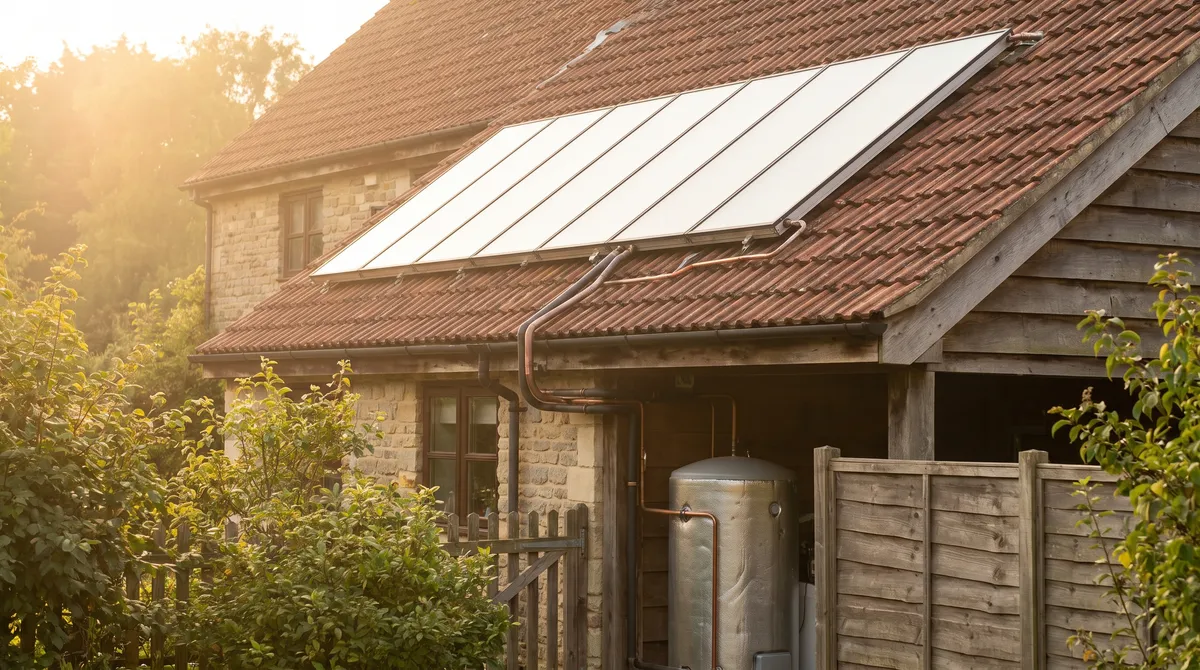
The principle is simple: a fluid heated by the sun in the collectors releases its heat into a storage tank. Here are the benchmarks that matter before you commit.
A dark collector absorbs the radiation and heats a heat-transfer fluid. That fluid flows to a tank where it warms the water via an exchanger. No conversion to electricity: the heat is used as is, hence the excellent yield.
Per square metre, thermal converts far more solar energy into usable energy than photovoltaics. To produce hot water, 4 to 6 m² of collectors are enough where you’d need a much larger PV panel area.
The individual solar water heater covers 60 to 70% of a Belgian household’s annual hot-water needs, and up to 80% in summer. The rest is handled by the backup (boiler, heating element or heat pump).
The combined solar system adds heating support: it pre-heats the heating circuit in the mid-seasons and can cut annual consumption by 15 to 25%, especially with low-temperature heating.
Flat-plate collectors, robust and economical, suit hot water. Evacuated tubes, more effective in cold weather and low sunlight, are preferred for heating support and less favourable climates.
In Belgium, production is strong from April to September and lower in winter. Hence the importance of a well-sized tank and an efficient backup to ensure comfort all year round.
* Indicative values for a properly sized and oriented domestic installation. Actual coverage depends on exposure, tilt and your consumption — clarified at the survey stage.
Thermal is unbeatable for hot water, but it’s not a universal solution. Here, honestly, are its strengths and the points to watch.
It comes into its own wherever there are regular hot-water needs and a well-exposed roof. A few cases where it makes the difference:

Large family, daily showers, a bathtub: the more hot water you use, the more profitable a solar water heater is. The thermal use case par excellence.
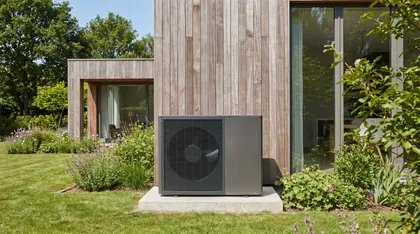
With low-temperature heating (underfloor or oversized radiators), a combined solar system eases the boiler in mid-season and cuts the heating bill.
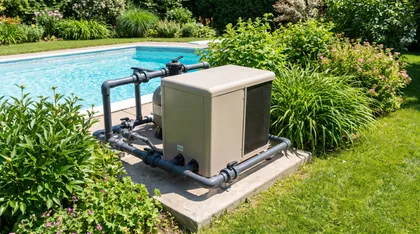
To extend the swimming season, dedicated collectors warm the pool water at little cost, with no gas or backup electricity.
If your priority is producing your own power, look instead at photovoltaics. And if you only want domestic hot water, the solar water heater is the most direct solution.
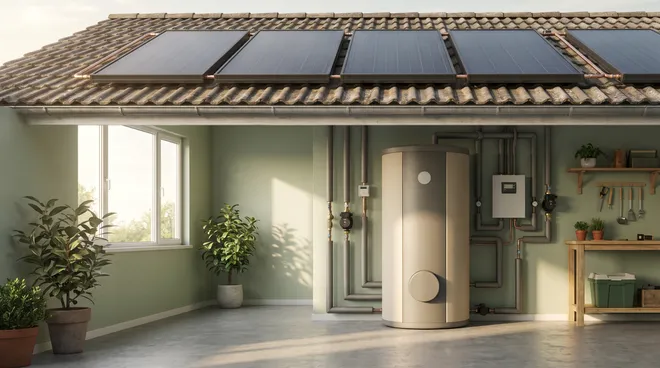
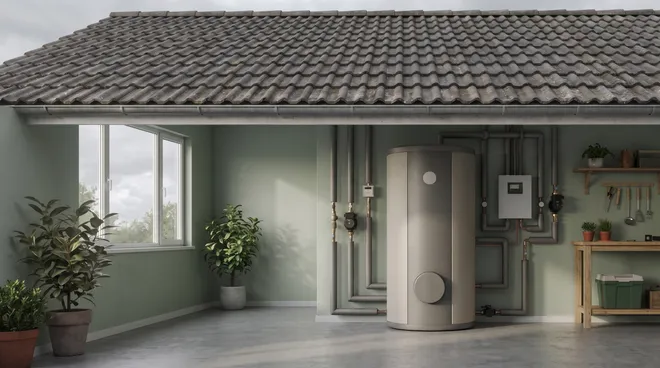
A family of four heated their water with gas all year round. We installed 5 m² of south-facing flat-plate collectors and a 300-litre solar tank, wired to pre-heat the existing boiler. The result: most of the hot water now comes from the sun, and the boiler only takes over as backup.
5.0/5 · 1verified reviews
« Devis clair, sans surprise, primes comprises. Un seul interlocuteur du début à la fin. Je recommande sans hésiter pour le photovoltaïque. »
Thermal excels at heat, photovoltaics at electricity. Compare them point by point, then open the application that fits your project.
| Critère | Solar thermalVous êtes ici | Solar water heaterVoir la gamme → | PhotovoltaicsVoir la gamme → |
|---|---|---|---|
| What is produced | Heat (water + heating) | Heat (hot water) | Electricity |
| Yield per m² | The highest | Very high | Lower |
| Main use | Hot water + support | Hot water only | All appliances |
| Winter production | Reduced | Reduced | Reduced but useful |
| Area needed | 4–6 m² | 3–5 m² | Larger |
| Needs covered | DHW + part of heating | DHW only | Household electricity |
| Ideal for | Hot water + heating | Everyday hot water | Electrical independence |
Domestic hot water from the sun: the SDHW covers 60 to 70% of a household’s needs. The most widespread thermal solution.
Discover the water heater →Dedicated collectors warm the pool water to extend the swimming season, with no gas or backup electricity.
Heat my pool →To produce your own electricity rather than heat. Often complementary to thermal on the same roof.
Compare PV →A heat pump can serve as an efficient backup to solar thermal for heating and hot water the rest of the year.
See heat pumps →An alternative to solar hot water: it draws heat from the ambient air to warm the tank, in any season.
Discover the thermodynamic one →An overview of solar energy in Belgium: photovoltaics, thermal, storage, grants and installation on one page.
Back to the solar guide →The price depends on the application (hot water only or heating support), the type of collectors and the tank size. Here are benchmarks for equipment installed in Belgium.
Request an itemised estimate →* Indicative ranges for an installed domestic system, excluding specific configurations. Itemised estimate at your free quote.
Solar thermal captures the sun’s heat to warm water or support heating, while photovoltaics convert light into electricity. Thermal has a far better yield per square metre but produces no power: the two are complementary and can coexist on the same roof.
Yes, very well. Belgian sunshine is enough to cover 60 to 70% of a household’s annual hot-water needs, and more in summer. Production is lower in winter, which is why a backup (boiler, heat pump or heating element) always complements the system.
Flat-plate collectors are robust and economical, perfect for domestic hot water. Evacuated tubes offer better yield in cold weather and low light: they’re preferred for heating support or less well-exposed roofs. The choice is made according to your project and your roof.
Partly, via a combined solar system (CSS). It pre-heats the heating circuit in the mid-seasons and cuts annual consumption by 15 to 25%, especially with low-temperature heating. It doesn’t replace your boiler or heat pump, it eases the load on it.
Depending on your region and income, an energy grant can reach €1,500 for a solar water heater or combined system, on top of the 6% VAT for homes over ten years old. We handle the grant application for you.
Not necessarily. If your priority is hot water, thermal is the most efficient per square metre. If you want electricity, it’s photovoltaics. Many households combine both: we define together the most profitable mix according to your roof and consumption.
Roof survey, tank sizing, grants calculated, a single point of contact. Describe your project in under a minute.