« Devis clair, sans surprise, primes comprises. Un seul interlocuteur du début à la fin. Je recommande sans hésiter pour le photovoltaïque. »
Pierre M.Tournai
The sun heats your pool water directly. Controlled by a bypass, your filtration pump pushes the water through absorber collectors (polypropylene or EPDM mats) laid on the roof, a pergola or the ground. A few degrees gained, a markedly longer swimming season — and a near-zero running cost.
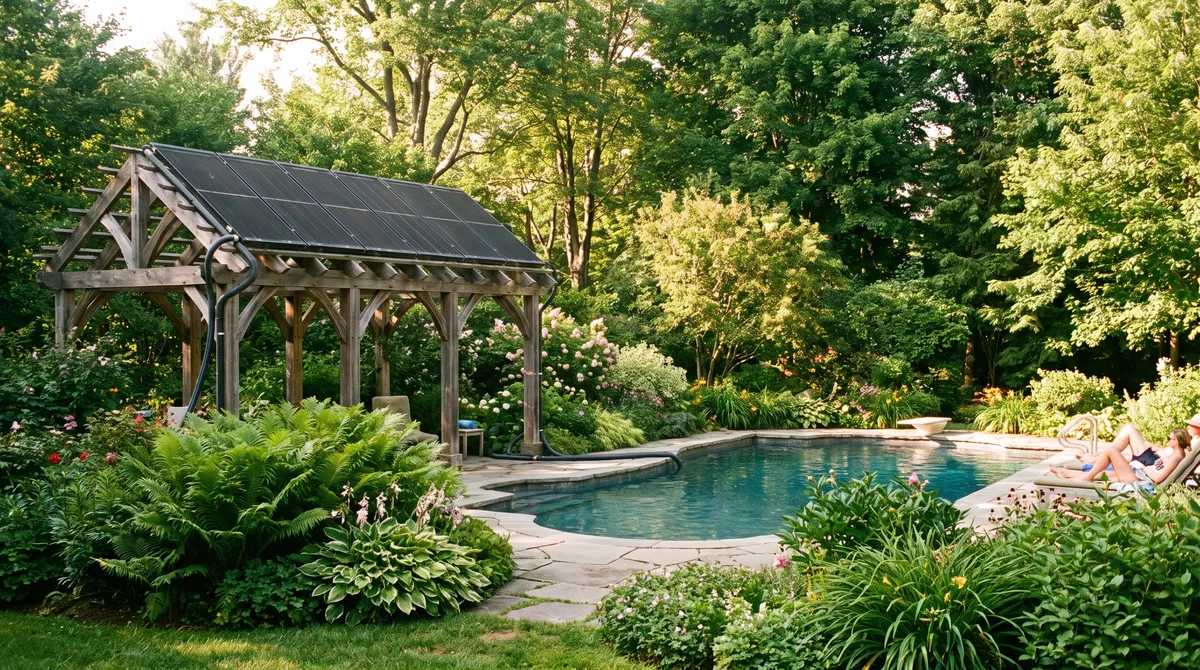
A simple, robust principle: the pool water flows through black absorbers heated by the sun. The concrete benchmarks for sizing the installation correctly in Belgium.
No heating element or compressor. The pool water circulates through polypropylene or EPDM absorber mats or panels; the sun warms the water mass as it passes, then it returns to the pool. Zero heating energy.
The collectors connect to the existing circuit via a bypass valve. When the sun is out, the water is diverted to the absorbers; otherwise it goes straight to the pool. No dedicated pump is needed in most cases.
Sizing rule: allow an absorber area equal to 50–80% of the pool surface depending on exposure and the target temperature. South-facing and shade-free, you stay near the lower end of the range.
Well sized, the installation typically gains 3 to 6 °C on the water compared with an unheated pool — enough to make cool Belgian nights bearable and bring forward the spring opening.
The collectors go wherever the sun hits: roof (ideally south-facing), pergola, garden shed or simply on a grassy slope. Light and modular, they adapt to the space available.
The cover is solar heating’s number-one ally: it limits night-time evaporation (the leading cause of losses) and retains the heat gained during the day. Without it, the solar gain melts away on cool nights.
* Indicative values for a properly sized, south-facing installation. Actual gain depends on the weather, the collector area, use of the cover and the pool volume — clarified at the survey stage.
It’s the most economical way to warm a pool, but it depends on the sun. Here, honestly, is where it shines and where a heat pump remains more suitable.
It comes into its own whenever you want to extend the season without inflating the bill. A few cases where it works wonders:
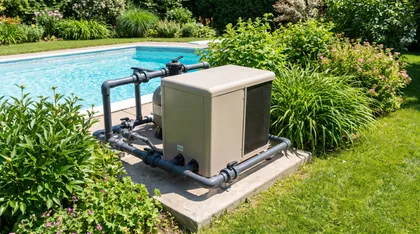
For a residential pool used in summer, solar is often enough to gain the degrees that change everything, without inflating the electricity bill.
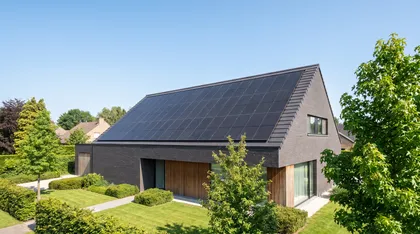
Do you have a south-facing surface near the pool (roof, shed, pergola)? It’s the ideal spot for high-performance absorber collectors.
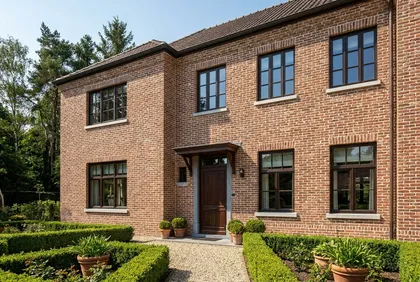
Want 100% renewable, silent heating, in keeping with a home already geared towards solar? Pool thermal fits in naturally.
If you want to set a target and swim even in overcast weather, the pool heat pump stays in control. Solar can also come as a complement. And to heat the home’s domestic water with the sun, see the solar water heater.
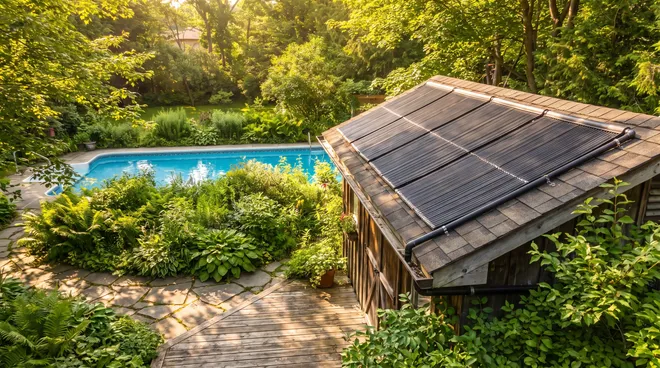
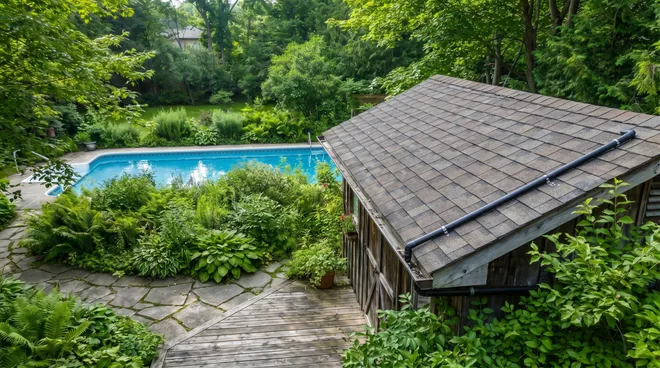
The client found the pool too cold at the start and end of the season. We laid 22 m² of EPDM absorber collectors on the south-facing roof, connected by bypass to the existing filtration, with a bubble cover. The result: 4 to 5 °C more on the water and two extra months of swimming, at a practically zero running cost.
5.0/5 · 1verified reviews
« Devis clair, sans surprise, primes comprises. Un seul interlocuteur du début à la fin. Je recommande sans hésiter pour le photovoltaïque. »
Pool solar wins on running cost and ecology; the heat pump on temperature control. Compare point by point, then open the solution that suits you.
| Critère | Solar pool heatingVous êtes ici | Pool heat pumpVoir la gamme → | Solar thermalVoir la gamme → |
|---|---|---|---|
| Running cost | Near zero | Compressor electricity | Near zero |
| Guaranteed temperature | No, depends on the sun | Yes, adjustable target | Depends on use |
| Weather dependence | High (day & sun) | Low | High |
| Ecological footprint | 100% renewable | Depends on the power mix | 100% renewable |
| Mounting area | 50–80% of the pool | Compact, ground-mounted | Depends on installation |
| Main use | Heat the pool water | Heat the pool water | Domestic water & heating |
| Ideal for | Extending the season at no cost | Controlled temperature, long season | Household hot water |
For a guaranteed temperature and the longest possible season, even in overcast weather. The ideal complement to solar.
Compare with the heat pump →The same principle applied to the home’s hot water and heating: capturing the sun’s heat rather than the swim.
Discover thermal →Produce your domestic hot water with the sun. An excellent companion to a collector-heated pool.
See the water heater →Thermal, photovoltaic, hybrid: understand the panel families to pick the right technology for the job.
Compare the types →Collector area, connection, cover: get an itemised estimate for your pool, no obligation.
Request a quote →An overview of our solar solutions in Belgium: photovoltaic, thermal, hybrid, batteries and pool.
Back to solar panels →The price depends on the pool surface, the type of collectors (mats or panels), the location and the connection. Here are benchmarks for an installation in Belgium.
Get my solar pool estimate →* Indicative ranges for an installed system, excluding specific configurations. Itemised estimate at your free quote.
The pool water is diverted by a valve (bypass) to black absorber collectors laid in the sun. As it passes through these polypropylene or EPDM mats, it warms up, then returns to the pool. The filtration pump, already in place, drives the circulation: there is no heating energy.
Absorbers are generally sized at 50 to 80% of the water surface. South-facing and shade-free, you stay near the lower end of the range; with less favourable exposure or a high target temperature, you move towards the top. The area is finalised at the survey stage.
A well-sized and well-exposed installation typically gains 3 to 6 °C compared with an unheated pool. That’s enough to bring forward the spring opening and better absorb cool Belgian nights. The actual gain depends on the weather and use of the cover.
No: heating is daytime and weather-dependent. Without sun, the collectors don’t produce. That’s the big difference from a heat pump, which maintains a target temperature whatever the weather. The two solutions are in fact often complementary.
It’s essential. Night-time evaporation is the leading cause of heat loss from a pool. A bubble cover retains the heat gained during the day and can, on its own, add a few degrees. Without it, the solar gain melts away on cool nights.
The heat pump uses electricity to guarantee a target temperature, even in overcast weather, and greatly extends the season. Solar heating doesn’t guarantee the temperature but costs almost nothing to run and stays 100% renewable. Depending on your expectations, we recommend one, the other, or both together.
A survey of your pool, collector area and connection calculated, a single point of contact. Describe your project in under a minute.