« Devis clair, sans surprise, primes comprises. Un seul interlocuteur du début à la fin. Je recommande sans hésiter pour le photovoltaïque. »
Pierre M.Tournai
The individual solar water heater (SDHW) captures the sun’s heat with thermal collectors, transfers it to a heat-transfer fluid, then to a tank via an exchanger. In Belgium, it covers 50 to 65% of your hot water needs over the year. The backup takes over in winter — you pay nothing for the sun.
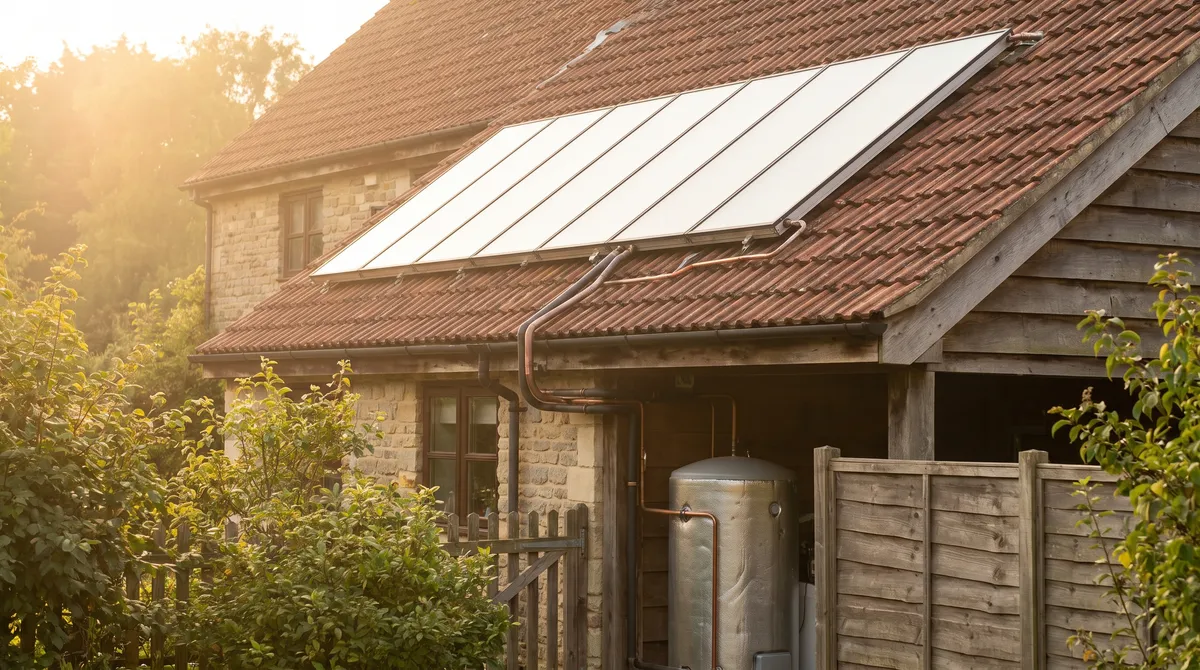
The figures that matter for a well-sized SDHW under the Belgian climate. Concrete benchmarks, not marketing.
Flat collectors, robust and economical, suit most roofs. Evacuated tubes, more efficient in low sunlight and cold, capture the Belgian winter better — at a higher cost.
Over an average year in Belgium, solar covers 50 to 65% of domestic hot water needs: nearly 100% in summer, far less in winter. Hence the indispensable backup during the dark months.
The solar tank with exchanger is sized to the household’s consumption: about 50 litres per person. Too small, it stores the summer surplus poorly; too large, the backup works too hard.
For a household of 4, count on 4 to 6 m² of collectors facing south, tilted at 35–45°. The surface is matched to the tank volume to avoid summer overheating.
The Belgian winter is not enough: a backup (electric element, boiler or heat pump) tops up the tank when the sun falls short. It is what guarantees hot water all year round.
An antifreeze water-glycol mix circulates in a closed loop between the collectors and the exchanger, driven by a controlled pump. A regulator stops the pump when the tank is warmer than the collectors.
* Indicative values for a standard domestic SDHW. The exact sizing (collectors, tank, backup) depends on your consumption and your roof — confirmed during the study.
No solution is perfect for every household. Here, honestly, is where the SDHW excels and where you should look elsewhere.
It comes into its own as soon as hot water use is regular and the roof is well exposed. A few cases where it shines:

The more hot water the household uses (showers, baths, dishes), the more profitable the SDHW. This is the ideal case of a home with 3 to 5 people.
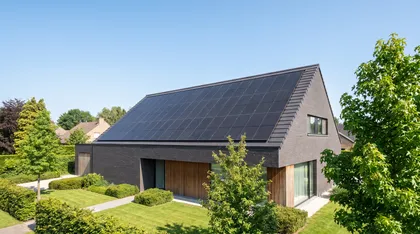
A clear roof facing south (or south-east/south-west), tilted around 35–45°, gives the best solar coverage rate over the year.
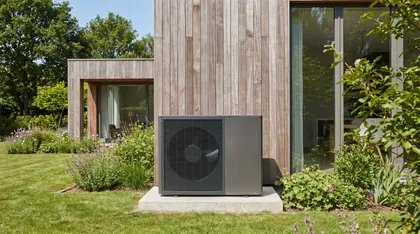
When replacing an old electric water heater, switching to solar slashes the hot-water bill and captures the regional subsidies.
If sunlight or roof space is limited, the heat-pump water heater (a heat pump on the air, not solar) heats the water all year. And to produce your electricity, see solar panels.
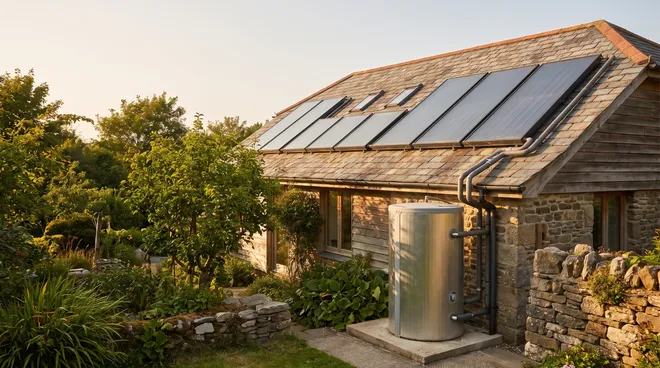
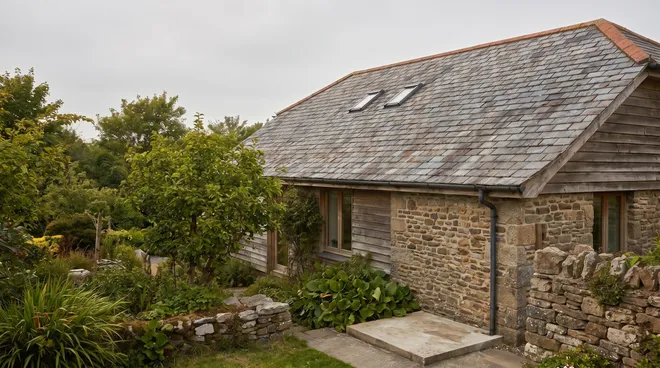
A Namur family was paying a heavy hot-water bill on an old electric water heater. We fitted 4.5 m² of south-facing flat collectors and a 300 L solar tank with exchanger, with electric backup. The result: most of the hot water is now solar, with the backup working only during the dark months.
5.0/5 · 1verified reviews
« Devis clair, sans surprise, primes comprises. Un seul interlocuteur du début à la fin. Je recommande sans hésiter pour le photovoltaïque. »
The SDHW wins on free energy and carbon footprint. Compare it point by point with the heat-pump model and overall solar thermal, then open the solution that interests you.
| Critère | Solar water heaterVous êtes ici | Heat-pump water heaterVoir la gamme → | Solar thermalVoir la gamme → |
|---|---|---|---|
| Energy source | Sun (free) | Air + electricity | Sun (free) |
| Hot-water coverage | 50–65% solar | Nearly 100% all year | 50–65% solar |
| Backup needed | Yes, in winter | No (self-sufficient) | Yes, in winter |
| Carbon footprint | The lowest | Low with green electricity | The lowest |
| Indicative price | €€€ — collectors + tank | €€ — more accessible | €€€€ — full system |
| Roof space | 4–6 m² needed | None | Large surface |
| Ideal for | South roof, high DHW use | Little sun or space | DHW + solar heating |
An overview of solar thermal: hot water, combined solar heating and large installations. The SDHW is part of it.
See solar thermal →A heat pump on the air, not solar: hot water all year without collectors, ideal if the roof is not suitable.
Compare the heat-pump model →Thermal for hot water, photovoltaic for electricity: understand the difference before choosing for your roof.
See the panel types →As a backup to an SDHW or to heat the whole home, the heat pump is the ideal complement to a solar hot-water strategy.
Discover the heat pump →Sizing, fitted price based on collectors and tank, and the share covered by Walloon or Brussels subsidies.
Request my quote →An overview of solar with us in Belgium: thermal, photovoltaic, batteries and subsidies on one page.
Back to the solar guide →The price depends on the type of collectors, the surface, the tank volume and the backup. Here are some benchmarks for an SDHW fitted in Belgium, subsidies deducted separately.
See the detailed SDHW price →* Indicative ranges for a fitted domestic SDHW, excluding specific configuration. Detailed estimate provided with your free quote.
Partly. The collectors produce all year, but the low sunlight from November to February is not enough to cover all the needs. That is why a backup (electric element, boiler or heat pump) takes over in winter. Over the year, solar still covers 50 to 65% of your hot water.
Flat collectors are robust, economical and suit most Belgian roofs. Evacuated tubes capture better in low sunlight and cold weather, so they improve the winter solar share, but cost more. The choice depends on your roof, your budget and your winter expectations.
A solar water heater uses thermal collectors to recover the sun’s heat. A heat-pump water heater is in fact a heat pump that draws heat from the ambient air, using electricity: it is not solar. The heat-pump model is self-sufficient all year and needs no roof collectors.
For a household of four, you generally plan 4 to 6 m² of collectors and a 200 to 300 litre tank, about 50 litres per person. The sizing is matched to your real consumption to avoid both a hot-water shortage and summer overheating.
Maintenance stays light but necessary: you must periodically check the heat-transfer fluid (antifreeze water-glycol mix), the circuit pressure and the proper operation of the pump and regulator. A check every few years preserves the output and the longevity of the installation, which exceeds 20 years.
Wallonia and Brussels support the SDHW with subsidies whose amount depends on your region and your income, and VAT drops to 6% for homes over ten years old. These aids significantly reduce the investment and the payback. We put together the subsidy file for you.
Free roof study, sizing, subsidies calculated, a single point of contact. Describe your project in under a minute.