« Devis clair, sans surprise, primes comprises. Un seul interlocuteur du début à la fin. Je recommande sans hésiter pour le photovoltaïque. »
Pierre M.Tournai
The voltage of a home battery shapes everything: compatibility with your hybrid inverter, charging efficiency, output power and scalability. 48V (low voltage) is mature and modular; high voltage (HV, 100 to 400 V and beyond) is built for large installations and three-phase setups. We help you decide, jargon-free.
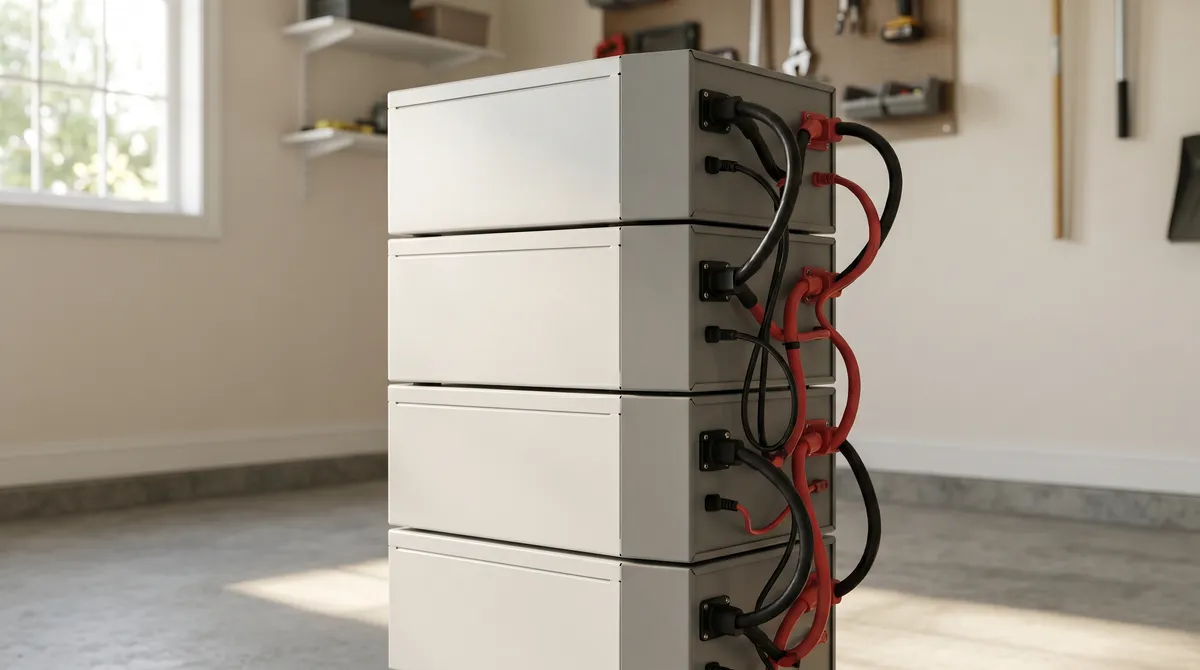
Voltage is no datasheet footnote: it determines compatibility, losses and power output. Here are the concrete benchmarks, no marketing spin.
The long-standing residential standard. A mature, widespread technology compatible with most hybrid inverters on the market. Ideal for small to medium capacities (5 to 15 kWh) and single-phase installations.
An HV battery stacks modules to reach a voltage close to the inverter’s DC bus. The result: less conversion, higher charge and discharge efficiency, and easier scaling of power output.
At equal power, a low voltage means a high current: more resistive (Joule) losses and heavier cabling. High voltage cuts the current, and with it the losses and the cable cross-section needed.
High voltage delivers strong instantaneous power more easily (heat pump, EV charging, three-phase). At 48V, power output stays excellent for everyday home use.
48V scales by adding batteries in parallel (modular and flexible). HV stacks modules in series to climb in capacity and voltage: easier to extend on larger installations.
Both families embed a BMS that protects each cell. High voltage calls for carefully insulated protection and cabling; a compliant installation by a professional is essential.
* Indicative benchmarks: the exact nominal voltage and usable range depend on the model and the number of modules. Precise figures given at the technical assessment.
No voltage is "better" in absolute terms: it all depends on your inverter, your target capacity and your type of connection. Here’s what matters.
The right choice depends mostly on your inverter and your capacity ambitions. Three typical profiles to place yourself:

For classic self-consumption of 5 to 15 kWh on a single-phase connection, 48V is the mature, compatible and cost-effective choice.

High capacity, three-phase connection, heat pump or EV charger: high voltage delivers efficiency and power without oversizing the cabling.

Above all, we start from your hybrid inverter: it dictates the accepted voltage. The battery voltage is chosen to match it, never the other way around.
Voltage decides compatibility and efficiency; LiFePO4 chemistry decides safety and lifespan. For an overview of the models, see the lithium battery range.
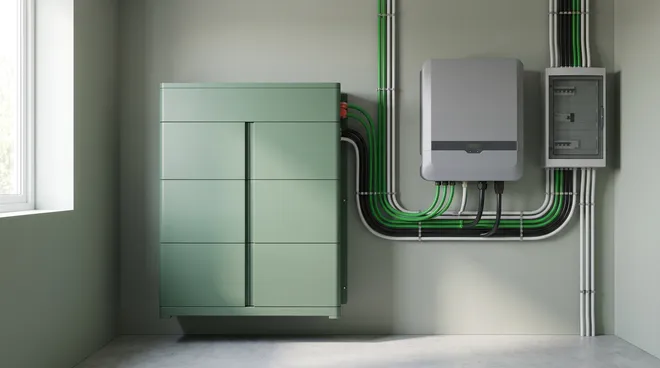
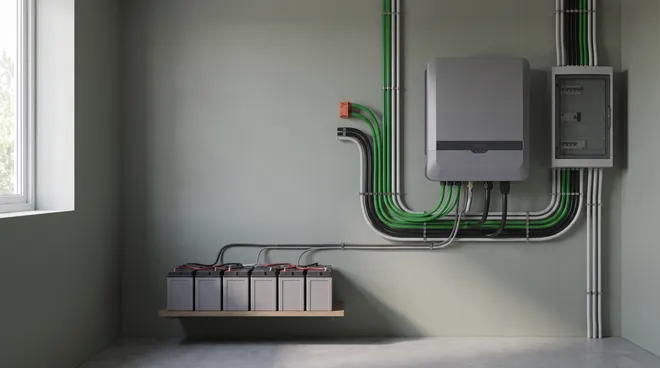
The household wanted to store a large solar surplus while powering a heat pump and an EV charger in three-phase. A 48V battery would have required heavy cabling and capped the power. We chose a high-voltage solution paired with a three-phase hybrid inverter: better efficiency and available power, no compromise.
5.0/5 · 1verified reviews
« Devis clair, sans surprise, primes comprises. Un seul interlocuteur du début à la fin. Je recommande sans hésiter pour le photovoltaïque. »
Three different questions not to be confused. Compare the voltage decision with LiFePO4 chemistry and the full range overview, then open the page that answers your need.
| Critère | Battery voltageVous êtes ici | LiFePO4 (chemistry)Voir la gamme → | Lithium battery (range)Voir la gamme → |
|---|---|---|---|
| Question addressed | Which voltage: 48V or HV | Which cell chemistry | Which model / overview |
| Main impact | Compatibility & efficiency | Safety & lifespan | Overall product choice |
| Inverter compatibility | Decisive criterion | Secondary | Covered in summary |
| Charge/discharge efficiency | Higher in HV | Very good (LiFePO4) | Depends on the model |
| Scalability | Parallel (48V) / series (HV) | Independent of chemistry | Varies by range |
| Level of detail | Technical, focused | Technical, focused | Broad overview |
| Ideal for | Choosing 48V or HV | Understanding the chemistry | Discovering the range |
All our lithium storage models: capacities, brands and uses. The right starting point before settling the voltage.
See the range →The safest and most durable chemistry. Not to be confused with voltage: these are two separate decisions.
Understand LiFePO4 →It dictates the accepted battery voltage. Inverter compatibility is the number-one criterion.
Choose the inverter →Store your solar surplus for the evening: principles, self-consumption and return on investment in Belgium.
See home storage →What capacity for your consumption? Sizing then guides the voltage choice.
Size my battery →An overview of our photovoltaic installations in Belgium: panels, inverters, batteries and subsidies.
Back to the solar guide →Price depends mostly on capacity (kWh), not just voltage. At comparable capacity, high voltage pays off on large installations. Here are benchmarks for installed equipment.
See battery price details →* Indicative installed ranges, excluding inverter and specific configuration. Detailed estimate during your free assessment.
The nominal voltage. A low-voltage battery runs around 48 V; a high-voltage (HV) battery stacks modules to reach 100 to 400 V and beyond. HV offers better efficiency and more power, while 48V is more mature, modular and broadly compatible.
Not at all. 48V remains the reference for single-phase homes and small to medium capacities (5 to 15 kWh). It’s a proven technology, compatible with most hybrid inverters and easy to extend by adding batteries in parallel.
Because its voltage is close to the inverter’s DC bus: there’s less conversion to perform. At equal power, the current is also lower, which reduces resistive (Joule) losses in the cabling. On a large installation, the efficiency gap becomes noticeable.
It’s the number-one criterion. Each hybrid inverter accepts a specific battery-voltage range: a 48V inverter won’t drive an HV battery, and vice versa. We always start from your inverter (or choose the inverter + battery pair together) to guarantee compatibility.
It calls for stricter cabling and insulation precautions, but both families embed a BMS that protects each cell. With a compliant installation by a certified professional, high voltage is perfectly safe day to day.
No, these are two separate decisions. Voltage (48V or HV) concerns compatibility and efficiency; chemistry (for example LiFePO4) concerns safety and lifespan. A battery can be low or high voltage while still being LiFePO4.
We analyse your inverter, your consumption and your capacity goal to recommend the right voltage. A single point of contact, subsidies handled.