« Devis clair, sans surprise, primes comprises. Un seul interlocuteur du début à la fin. Je recommande sans hésiter pour le photovoltaïque. »
Pierre M.Tournai
Lithium iron phosphate (LFP) has become the benchmark for residential solar storage. Cobalt-free and chemically stable, it doesn’t run away thermally, takes 6,000 to 10,000 cycles and discharges almost fully. A little bulkier than NMC, but far safer and more durable — exactly what you want from a battery installed at home for fifteen to twenty years.
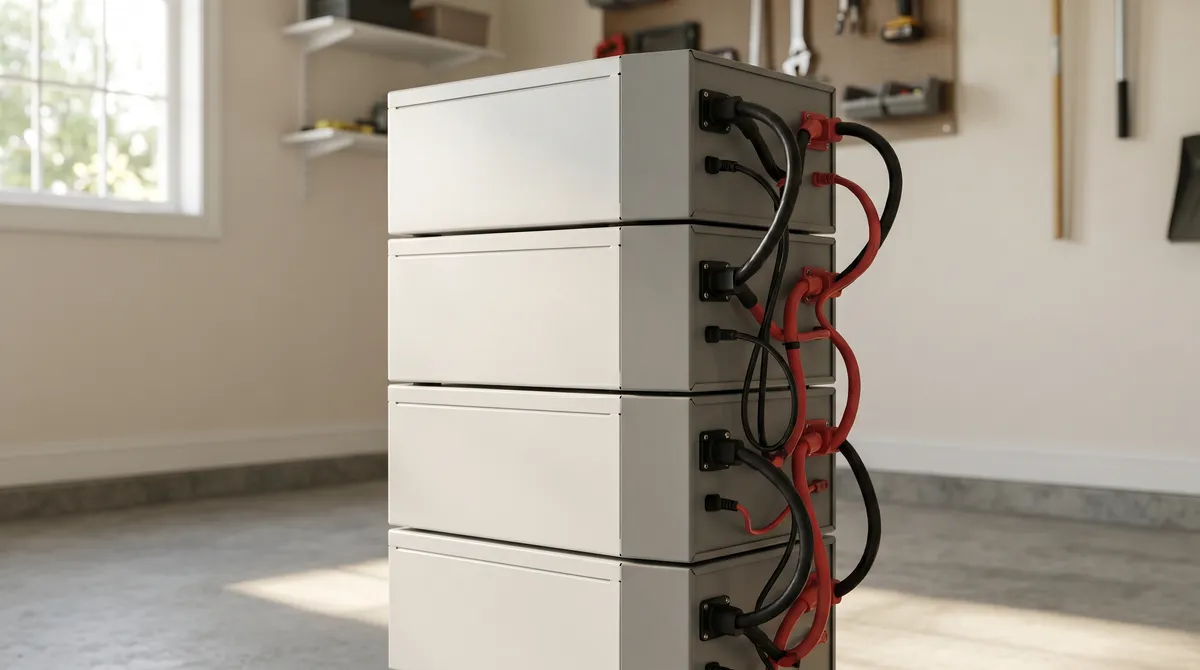
The figures that matter for an LFP-chemistry solar storage battery, installed by our teams. Concrete benchmarks, not marketing.
The iron-phosphate bond is very stable: LFP doesn’t go into thermal runaway the way some other lithium chemistries can. No fire risk in case of overheating or short circuit — the decisive argument for a battery installed in a garage or cellar.
LFP uses neither cobalt nor nickel, costly metals that are problematic to extract. A cleaner chemistry, more stable over time and easier to recycle at end of life.
Where an NMC chemistry lasts 3,000 to 4,000 cycles, LFP takes 6,000 to 10,000 before dropping to 80% capacity. At one cycle a day, that’s fifteen to twenty years of service.
LFP empties almost fully without damage. You use nearly all the stated capacity, against 80 to 90% on other chemistries — that’s more genuinely usable kWh per cycle.
LFP copes well with heat and keeps good performance over a wide temperature range. In a Belgian winter, you simply avoid freezing: an indoor install (garage, utility room) is plenty.
LFP stores a little less energy per litre than NMC: at equal capacity the cabinet is bigger and heavier. No matter for a fixed wall battery — you trade volume for safety and longevity.
* Indicative values for common residential-grade LiFePO4 batteries. Actual lifespan depends on the number of cycles, temperature and BMS management — clarified at sizing.
No chemistry is perfect for every use. Here, honestly, is where LFP excels and where you need to be aware.
It comes into its own whenever you want a safe, durable battery used to the full, day after day. A few cases where it shines:
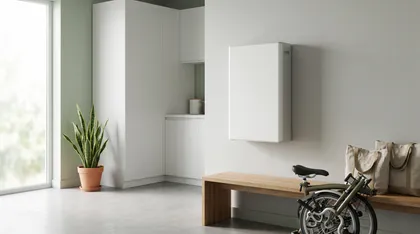
You store your panels’ surplus during the day to consume it in the evening. LFP, called on every day, keeps the pace for fifteen to twenty years without weakening.
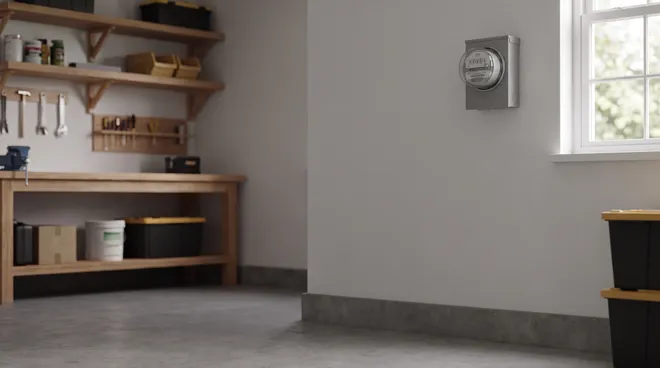
Garage, utility room, cellar: LFP’s thermal stability allows a home installation with no fear of runaway. Safety first.

Paired with a hybrid inverter, LFP powers your priority circuits during an outage. Its deep discharge maximises the available autonomy.
For an overview of lithium technologies and to choose the right capacity, start from our lithium battery page. And to size the storage to your actual consumption, see the home battery.
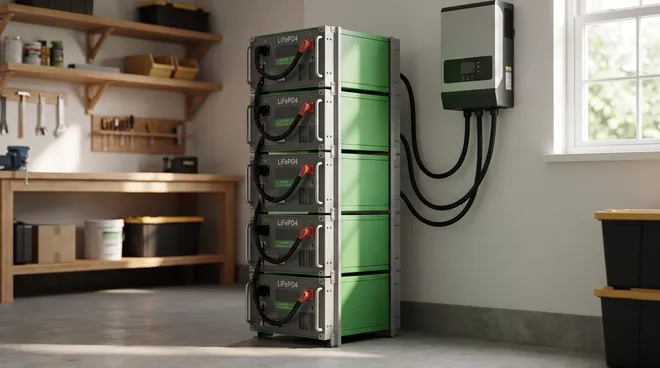
The family produced a lot during the day but consumed mostly in the evening, and reinjected their surplus at a loss. We installed a 12 kWh LiFePO4 battery paired with their hybrid inverter: the afternoon surplus now powers the evening, and the LFP’s near-full discharge makes every kWh usable.
5.0/5 · 1verified reviews
« Devis clair, sans surprise, primes comprises. Un seul interlocuteur du début à la fin. Je recommande sans hésiter pour le photovoltaïque. »
LFP wins on safety, lifespan and deep discharge. Compare it with the lithium range as a whole and with the home-battery approach, then open the page that interests you.
| Critère | LiFePO4 (LFP)Vous êtes ici | Lithium battery (range)Voir la gamme → | Home batteryVoir la gamme → |
|---|---|---|---|
| Thermal safety | Maximum, no runaway | Varies by chemistry | Depends on the chosen tech |
| Lifespan | 6,000–10,000 cycles | 3,000–10,000 by chemistry | Depends on the tech |
| Depth of discharge | 90–100% | 80–100% | Depends on the tech |
| Density / bulk | Bulkier | NMC more compact | Variable |
| Composition | Cobalt-free | Depends on chemistry | Depends on the tech |
| Approach | Choice of chemistry | Lithium overview | Home sizing |
| Ideal for | Safety & longevity | Comparing the techs | Calibrating your capacity |
The overview of lithium technologies for solar: chemistries, capacities and how they work. The right starting point.
See the lithium range →How to size storage to your actual home consumption, whatever the chosen chemistry.
Size your battery →Low or high voltage: the battery’s electrical architecture affects inverter compatibility and efficiency.
Understand voltage →All storage paired with photovoltaics: self-consumption, surplus and operation with your panels.
See the solar battery →Keeping the power on during an outage: LFP’s deep discharge maximises the available backup autonomy.
Discover backup →An overview of our solar offer in Belgium: panels, inverters, batteries and grants on one page.
Back to the solar guide →The price depends on the capacity (kWh), the voltage and the associated inverter. LFP costs a little more than lead to buy, but its longevity divides the cost per kWh stored over time. Here are benchmarks for installed LFP.
See the detailed battery price grid →* Indicative ranges per installed LiFePO4 battery, excluding inverter and specific configuration. Itemised estimate at your free quote.
For three reasons: safety, lifespan and stability. Lithium iron phosphate doesn’t go into thermal runaway, takes 6,000 to 10,000 cycles and discharges almost fully without damage. Its cobalt-free chemistry is also cleaner. Its one downside, a slightly larger volume, is of no importance for a wall-mounted battery.
NMC (nickel-manganese-cobalt) stores more energy per litre, so it’s more compact, but it’s less thermally stable, lasts fewer cycles and contains cobalt. LFP is bulkier but much safer, more durable and cleaner. For a home battery, where space is no problem, LFP is the best compromise.
Between fifteen and twenty years in normal solar use. The chemistry withstands 6,000 to 10,000 full cycles before dropping to 80% of its capacity. At one charge-discharge cycle a day, that amply covers the lifespan of a photovoltaic installation.
That’s precisely its strong point: the iron-phosphate bond is very stable and doesn’t run away thermally, even in case of short circuit or overheating. It’s the safest lithium chemistry for a home installation, which allows fitting in a garage, utility room or cellar.
Almost. LFP accepts 90 to 100% depth of discharge without harm, against 80 to 90% on other chemistries. In practice, you use nearly all the stated kWh on each cycle, which improves the actual efficiency of your storage.
It copes well with a wide temperature range, but charging at sub-zero temperatures is limited. That’s why it’s always installed away from frost, indoors. In normal use, a garage or utility room is enough — no particular constraint in our climate.
Free sizing based on your consumption, grants calculated, a single point of contact. Describe your project in under a minute.