« Devis clair, sans surprise, primes comprises. Un seul interlocuteur du début à la fin. Je recommande sans hésiter pour le photovoltaïque. »
Pierre M.Tournai
The brain of your solar installation. The hybrid inverter converts the power from your panels, charges and discharges the battery, and arbitrates exchanges with the grid — all to maximise your self-consumption. And during an outage, its backup function keeps your essential circuits powered.
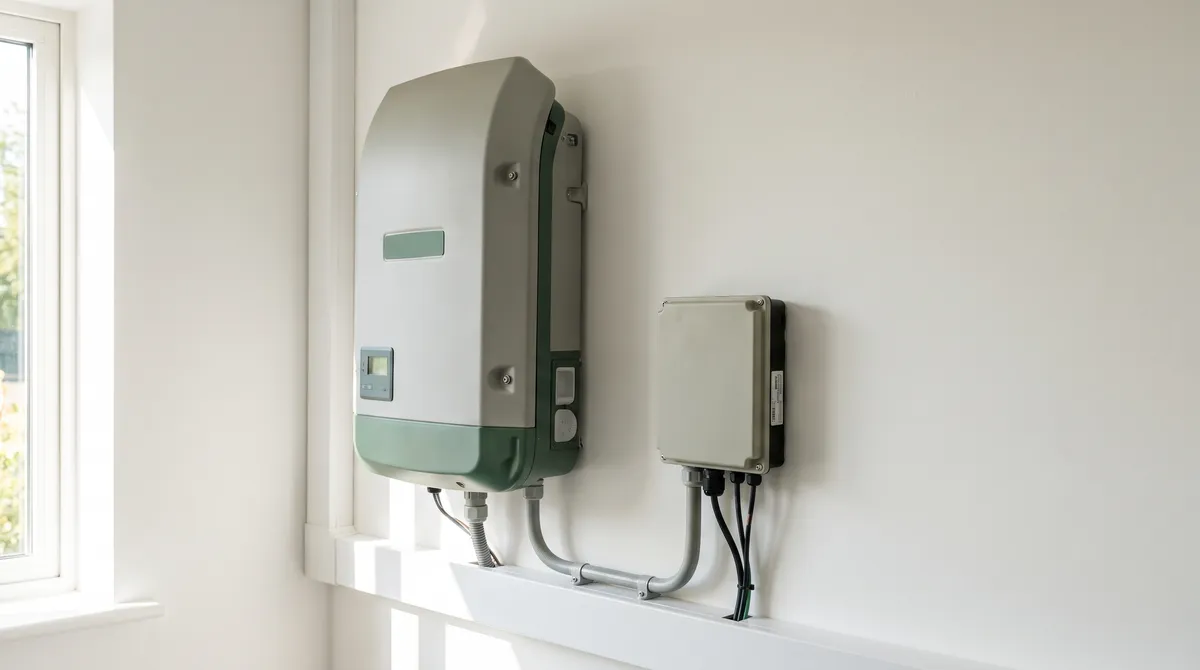
The functions and figures that matter for a well-sized hybrid inverter, fitted by our teams. Concrete benchmarks, not marketing.
MPPT (maximum power point tracker) to draw the most from your panels, an inverter to produce 230 V, and a reversible battery charger. A single device arbitrates production, storage and grid instead of three separate units.
DC/AC conversion efficiency exceeds 97% on good models. With DC coupling, the energy goes through only one conversion before the battery: fewer losses than a battery added separately on the AC side.
You can install it today with your panels and add the battery later, without replacing the inverter. Check the supported battery voltage range (high or low voltage) to keep your options open.
During a grid outage, the backup output (EPS) re-powers your essential circuits from the battery and panels. Switchover takes anywhere from a few milliseconds to a few seconds depending on the model and wiring.
Available in single-phase (most Belgian homes) and three-phase for more powerful installations or charging points. The choice depends on your connection and the power of your panels.
An energy meter continuously measures your consumption and your export. The inverter stores the surplus, gives it back in the evening and limits grid export — at the heart of self-consumption under the prosumer tariff.
* Indicative values for mainstream hybrid inverters. Exact performance depends on the model, the power of the panels and the associated battery — confirmed during the study.
No solution is perfect for every project. Here, honestly, is where the hybrid excels and where another approach may be enough.
It comes into its own as soon as you aim for self-consumption, storage or the security of a backup supply. A few cases where it shines:
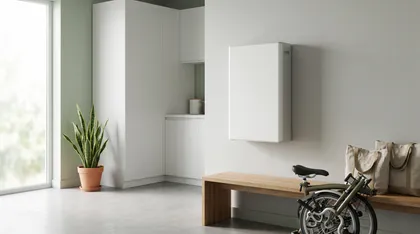
You install (or plan) a battery to use your own energy in the evening: the hybrid manages everything and avoids adding a separate battery inverter.

You want to keep the fridge, internet and lighting running during an outage: the backup output (EPS) switches over to the battery automatically.
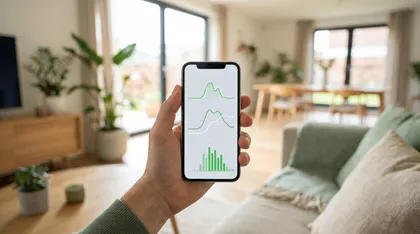
With the Digimeter and the prosumer tariff, exporting earns little: storing and self-consuming your surplus becomes the real lever for savings.
If storage is not on the agenda in the short term, first compare the inverter range of standard models. And if your panels face different directions or are partly shaded, take a look at the micro-inverter.
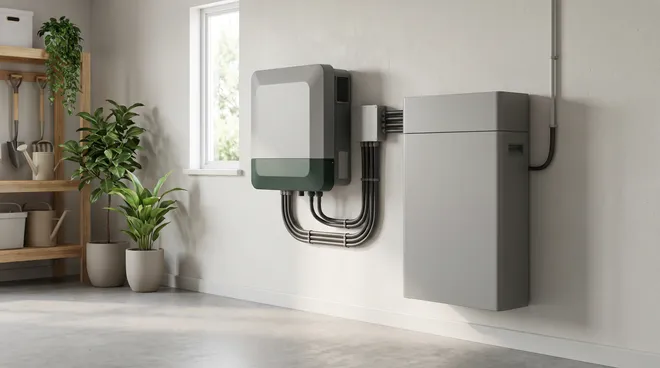
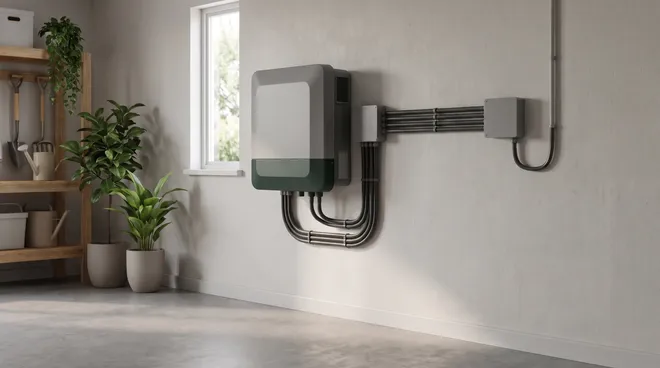
The customer was exporting his midday surplus to the grid for a trivial value under the prosumer tariff. We replaced his inverter with a hybrid model and added a 10 kWh battery: the surplus is now stored during the day and given back in the evening, and the backup output secures the essential circuits.
5.0/5 · 1verified reviews
« Devis clair, sans surprise, primes comprises. Un seul interlocuteur du début à la fin. Je recommande sans hésiter pour le photovoltaïque. »
The hybrid wins on storage, backup and self-consumption control. Compare it point by point with the micro-inverter and the general range, then open the solution that interests you.
| Critère | Hybrid inverterVous êtes ici | Micro-inverterVoir la gamme → | Inverter (range)Voir la gamme → |
|---|---|---|---|
| Indicative price | €€€ — higher | €€€ — per panel | The gentlest |
| Battery management | Built in | No (AC to add) | Depending on model |
| Backup function | Yes (EPS) | Rare | Depending on model |
| Complex roofs / shading | Good (MPPT) | Ideal | Good |
| Self-consumption | Maximum (storage) | No storage | No storage |
| Scalability | Battery-ready | Panel by panel | Limited |
| Ideal for | Solar + battery + backup | Complex roofs, safety | Simple solar, set budget |
An overview of inverter types: string, micro and hybrid. To understand which one suits your installation.
Compare the range →One inverter per panel: ideal on complex or partly shaded roofs. Safety and panel-by-panel monitoring.
Discover the micro-inverter →The natural companion of the hybrid: it stores the daytime surplus to use in the evening and boost self-consumption.
See the batteries →Residential storage solutions, capacities and compatibilities. To choose a battery suited to your hybrid inverter.
Choose your battery →Keeping the power on during an outage: how to size the battery and the backup for your essential circuits.
Understand backup →An overview of our photovoltaic installations in Belgium: panels, inverters, batteries and subsidies on one page.
Back to the solar guide →The price depends on the power, the number of MPPTs, single or three-phase and the backup function. The hybrid pays off above all when paired with a battery. Here are some benchmarks for a fitted hybrid.
See the detailed solar price list →* Indicative ranges for a fitted hybrid inverter, excluding battery and specific configuration. Detailed estimate provided with your free quote.
A standard inverter only converts the power from the panels into 230 V. The hybrid adds a reversible battery charger and grid management: at every moment it decides whether to consume, store or export, and it can power the house during an outage. It is a control device, not just a converter.
Yes, that is the whole point of being "battery-ready". You fit the hybrid with your panels and it works like a standard inverter. The day you add a battery, it manages it without needing to replace the device — provided you checked voltage compatibility from the start.
With DC coupling, the battery connects directly to the hybrid inverter: the energy goes through only one conversion, with fewer losses. With AC coupling, you add a separate battery inverter to an existing installation: more flexible in renovation, but slightly less efficient. The hybrid favours DC coupling.
Yes, if it is equipped with the backup function (EPS) and connected to a battery. During an outage, it isolates the house from the grid and re-powers the essential circuits — fridge, lighting, internet. The power and duration depend on the battery capacity; an inverter on its own, without a battery, cannot provide backup.
It depends on your connection and the power. Most Belgian homes are single-phase, which is enough for a standard residential installation. Three-phase is needed for high power, a charging point or an already three-phase connection. We check your meter before choosing.
More than ever. With the Digimeter and the prosumer tariff, energy exported to the grid earns very little. The hybrid, paired with a battery, stores your midday surplus to give it back in the evening: you consume your own production instead of selling it at a loss. It is the main lever for savings today.
Free study, panel/battery/backup sizing, subsidies calculated, a single point of contact. Describe your project in under a minute.