« Devis clair, sans surprise, primes comprises. Un seul interlocuteur du début à la fin. Je recommande sans hésiter pour le photovoltaïque. »
Pierre M.Tournai
At the heart of a panel, the photovoltaic cell is a silicon cell that converts light directly into current. Here we get into the technology: the photovoltaic effect, the junction, cell efficiency, peak power in Wp and real-world behaviour under Belgian skies. Enough to understand what you are really buying.
The parameters that describe a photovoltaic cell and module. Concrete benchmarks for reading a spec sheet without being dazzled by marketing.
The cell is a thin silicon wafer doped in two layers. When a photon strikes the junction, it frees an electron: this movement of charges creates a direct current. No mechanism, no moving part — just light and the semiconductor.
Monocrystalline PERC remains the standard; TOPCon adds a passivation layer for higher efficiency, and heterojunction (HJT) combines crystalline and amorphous silicon for the best performance and a low temperature coefficient.
Cell efficiency (often 23–25%) is always higher than module efficiency, which accounts for the gaps, the glass and the frame. It is module efficiency that determines the power per m² of roof.
Peak power (Wp) is measured under STC conditions: 1000 W/m² of sunlight, cell at 25°C, standardised spectrum. It is a comparison reference; real output in Belgium depends on orientation and weather.
A heated cell produces less. For each degree above 25°C, power drops by about 0.30% (PERC) to 0.26% (HJT). Under Belgium’s temperate skies, the impact stays moderate and works in favour of output.
Half-cut cells and multiple busbars reduce resistive losses and poor behaviour in shade. Bifacial also captures light reflected from the rear — a bonus on a light-coloured roof or on the ground.
* Indicative values for mainstream monocrystalline modules (PERC/TOPCon/HJT). Exact performance depends on the maker, the model and the installation conditions — confirmed in your study.
PV technology is mature and reliable, but its figures should be read with nuance. Here, honestly, is what the cell does very well and what to keep in mind.
The right cell depends on your roof and your goal. A few concrete cases where each technology takes the lead:

On a clear south slope, monocrystalline PERC offers the best efficiency/price ratio. The proven technology, ideal for most Belgian homes.

When every m² counts or a chimney casts shade, TOPCon and half-cut cells maximise the Wp and cope better with partial shading.

On a light, well-ventilated surface, bifacial HJT captures light reflected at the rear and limits heat losses: extra output.
Before comparing cells, set the scene: discover the types of solar panels by use, or the overview of the installation on solar panels.
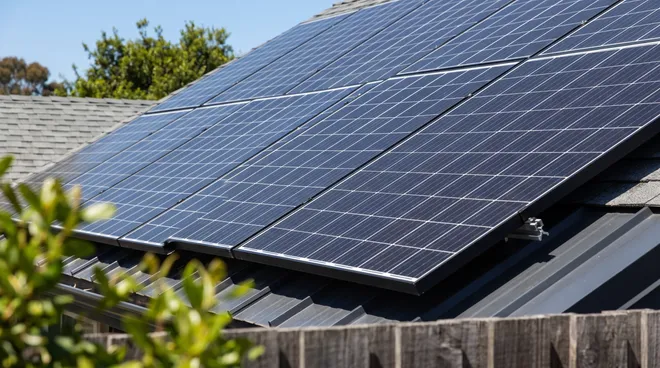
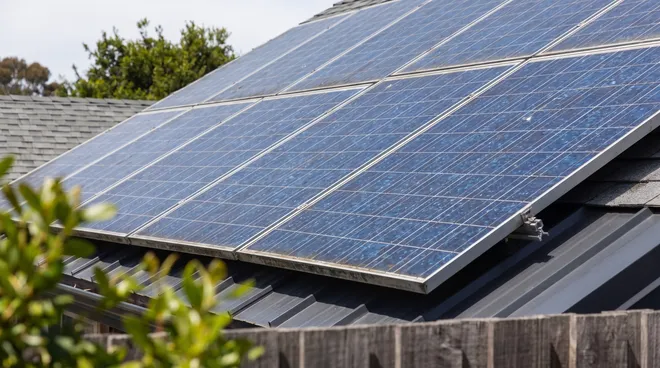
On a limited roof, the customer was hesitating to go solar for lack of surface. By choosing 450 Wp TOPCon half-cut cells rather than old 270 Wp modules, we fitted 1.6 times more power on the same surface — without touching the framework.
5.0/5 · 1verified reviews
« Devis clair, sans surprise, primes comprises. Un seul interlocuteur du début à la fin. Je recommande sans hésiter pour le photovoltaïque. »
This page digs into the cell and the module. To compare uses or discover plug-and-play formats, open the dedicated pages.
| Critère | PV cellVous êtes ici | Panel typesVoir la gamme → | Balcony panelVoir la gamme → |
|---|---|---|---|
| Angle of the page | The cell & its technology | Formats by use | The ready-to-plug kit |
| Technical level | In depth | Comparative | General public |
| Efficiency covered | Cell vs module | By type | Overall |
| Typical power | 430–500 Wp / module | Depending on use | 300–800 Wp / kit |
| Implementation | Roof-mounted | Roof / ground | Balcony, no works |
| Temperature coefficient | Detailed | Mentioned | Not covered |
| Ideal for | Understanding the technology | Choosing a format | Tenant / small budget |
Monocrystalline, bifacial, solar tiles: compare formats and uses rather than the cell alone.
Compare the types →The cell produces direct current: the inverter turns it into usable alternating current. The key link for real output.
Understand the inverter →Orientation, tilt, shade: the roof determines what your cells will really produce each year.
See the solar roof →Store the surplus from your cells to climb in self-consumption and use your own sun in the evening.
Discover the battery →Which technology, how many Wp, what yield at your place: we cost everything in a free study.
Request my study →An overview of our photovoltaic installations in Belgium: equipment, fitting, self-consumption and subsidies.
Back to the solar guide →A module’s price depends on the cell technology, the power and the brand. We mainly think in €/Wp and at the level of the complete installation. Here are some benchmarks for supply-and-fit.
See a costed solar study →* Indicative ranges for mainstream modules, supply and fitting. The exact estimate is made during your free solar study.
Through the photovoltaic effect. The cell is a thin silicon wafer doped in two layers forming a P-N junction. When a photon of light strikes it, it frees an electron; the movement of these charges creates a direct current. No moving part, no combustion: it is the light that does the work directly.
Cell efficiency measures the conversion of an isolated cell, often 23 to 25%. Module efficiency, in turn, accounts for the gaps between cells, the glass and the frame: it is always lower, around 21 to 23%. It is the latter that determines how many Wp you fit per m² of roof.
Monocrystalline PERC offers the best price/performance ratio and remains the standard. TOPCon adds a passivation that gains a few efficiency points. Heterojunction HJT aims for top efficiency and the best heat behaviour. On a limited or shaded roof, paying for TOPCon or HJT is justified; on a large, clear south slope, PERC is often enough.
Peak power (Wp, watt-peak) is measured under standard test conditions: 1000 W/m² of sunlight, cell at 25°C and a standardised light spectrum. It is a comparison reference between modules, not the real output. In Belgium, you harvest on average about 950 kWh per kWp installed per year, depending on orientation and weather.
Yes. Above 25°C, each extra degree loses about 0.30% of power for a PERC cell, a little less for HJT (≈ 0.26%). That is why good ventilation at the rear of the modules matters. Belgium’s temperate climate limits this effect: our moderate summers are rather favourable to output.
A cell loses about 0.4 to 0.5% of power per year. Makers generally warrant 25 to 30 years of production, with at least 87% of the initial power at the end. In practice, a cell fitted today will still produce most of its potential three decades from now.
Recommended cell technology, suitable peak power and estimated yield at your place. Describe your project in under a minute.