
Aller au contenu
The energy one stop shop — active across Belgium
Heat pump range · Water-to-water (groundwater)

Water-to-water heat pump: the highest efficiency, drawn from groundwater

The water-to-water heat pump captures energy from groundwater, which stays stable at around 10 to 12°C all year long. This near-constant source gives it the highest COP of any heat pump, with no drop in performance in winter. It requires a usable aquifer, sufficient flow and an abstraction permit — we check everything before installing.

COP ~5
constant groundwater
2 boreholes
abstraction + return to aquifer
Permit required
Walloon Water Code
Water-to-water heat pump: the highest efficiency, drawn from groundwater
SCOP up to 5.5the highest of all heat pumps
Source 10–12°Cstable year-round
Technical specifications

What a water-to-water heat pump is really worth

The figures that matter for a groundwater heat pump, studied and installed by our teams. Concrete benchmarks, not marketing.

  • Efficiency
    SCOP 5–5.5 seasonal

    The water-to-water heat pump posts the best efficiency of any heat pump. With groundwater permanently at 10–12°C, it delivers around 5 kWh of heat for 1 kWh of electricity — well above an air-to-water unit in winter.

  • Energy source
    10–12°C year-round

    Unlike outdoor air, which drops below zero, groundwater stays at a near-constant temperature. No frosting, no defrost cycles: performance doesn’t collapse in severe cold.

  • Abstraction
    Twin boreholes

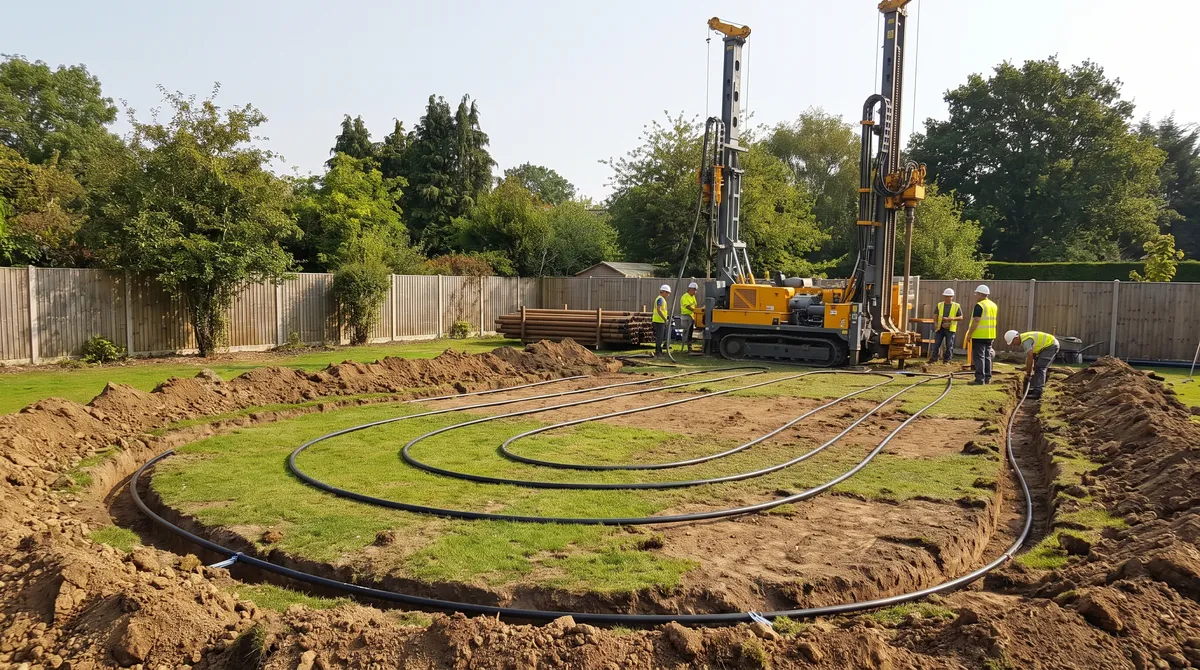
    An abstraction well draws water from the aquifer, a return well sends it back after heat exchange. The water isn’t consumed, only cooled by a few degrees and returned underground.

  • Flow temperature
    35–55°C

    Ideal as a low-temperature flow with underfloor heating. Possible with low-temperature radiators. The lower the flow temperature, the higher the COP climbs.

  • Geocooling
    Included

    In summer, cool groundwater cools the home virtually for free (passive geocooling), without running the compressor. Summer comfort as a bonus to winter heating.

  • Lifespan
    20–25 years

    The borehole and probes are long-lasting; the indoor machine, sheltered from the weather, lasts longer than an exposed outdoor unit. Annual servicing is enough.

* Indicative values for a standard water-to-water installation. Actual performance depends on the aquifer’s flow, water quality and heating circuit — confirmed after the hydrogeological study.

Full transparency

Pros & cons of water-to-water

No solution is perfect for every site. Here, honestly, is where the water-to-water heat pump excels and where it runs into constraints.

Where it shines

  • The best efficiencyThe highest COP/SCOP of any heat pump, thanks to a stable, warm source.
  • Constant winter performanceNo drop in severe cold, no defrosting: the aquifer stays at 10–12°C.
  • Virtually free geocoolingPassive cooling in summer with cool groundwater, no compressor.
  • Discreet and durableNo noisy outdoor unit; sheltered indoor machine, long lifespan.

What you should know

  • A usable aquifer is mandatoryYou need an accessible aquifer with sufficient flow — not feasible everywhere.
  • Abstraction permit requiredAuthorisation under the Water Code (Wallonia), with analysis and declaration.
  • The highest investmentThe twin borehole weighs heavily: it’s the most expensive heat pump to install.
  • Water quality is decisiveWater too high in iron or limescale can clog the exchanger: a prior analysis is essential.
Right for which project

Is a water-to-water heat pump right for you?

It comes into its own when the site offers a usable aquifer and you’re aiming for maximum efficiency over the long term. A few cases where it shines:

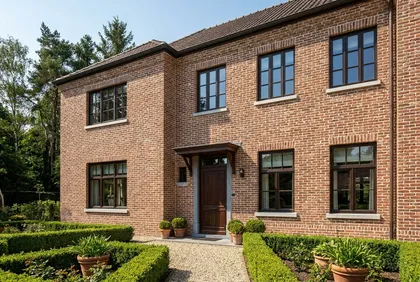
  • High-performance new build

    High-performance new build

    In a new build, low-temperature underfloor heating and an accessible aquifer unlock the full potential of water-to-water: the highest COP for a minimal bill.

  • A plot with accessible groundwater

    A plot with accessible groundwater

    If a groundwater aquifer with sufficient flow sits beneath your plot, water-to-water makes better use of this resource than any other heating solution.

  • Ambitious renovation

    Ambitious renovation

    In a well-insulated home converted to low temperature, water-to-water replaces an oil or gas boiler while sharply cutting the energy bill.

No usable aquifer, or a tighter budget?

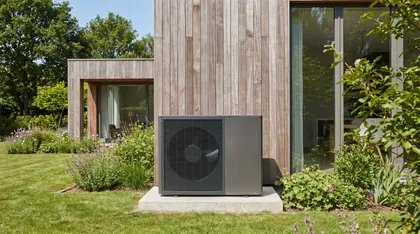
Without accessible groundwater, a geothermal heat pump captures energy from the ground through buried probes, with excellent efficiency. And for a tighter budget with no borehole, an air-to-water heat pump remains the simplest solution to install.

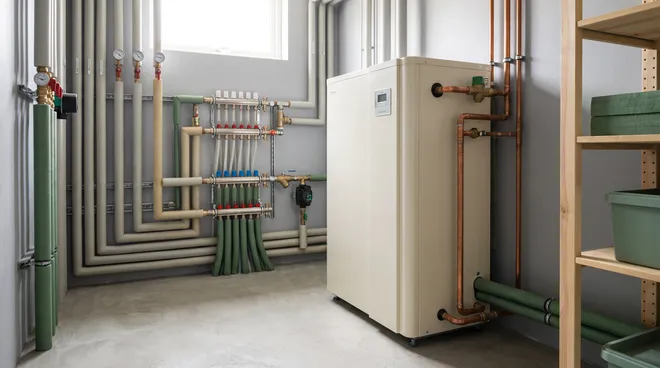
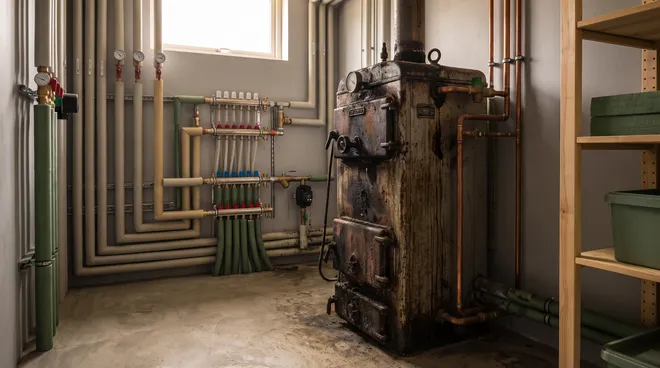
AFTER photo — water-to-water heat pump and groundwater manifolds
BEFORE photo — old oil boiler in the basement
Avant Après
Glissez la poignée pour comparer
Real case · detached house, Gembloux

An aquifer 9 metres down heating the whole house

During a major renovation, the owners wanted to drop oil while aiming for maximum efficiency. The study confirmed an aquifer with sufficient flow at 9 metres. We carried out the twin borehole, obtained the abstraction permit and connected a water-to-water heat pump to the existing underfloor heating: constant performance and geocooling in summer.

  • COP 5.2measured in winter
  • −70%on the heating bill
  • 0 oilfossil energy eliminated
Customer reviews

They chose wendows

5.0/5 · 3verified reviews

« Châssis, panneaux et pompe à chaleur en une seule fois : on a eu un seul devis, un seul planning et zéro paperasse pour les primes. Le résultat est impeccable et notre facture d'énergie a chuté. On ne pensait pas que ce serait aussi simple. »
Famille DuboisWavre · Brabant wallon
« Passage du mazout à une pompe à chaleur air-eau. Chantier propre, anciens radiateurs conservés. La maison est mieux chauffée pour bien moins cher. »
Ahmed B.Charleroi
« PAC air-air réversible installée avant l'été. Confort été comme hiver, et le SAV répond vite. Très satisfait du suivi. »
Nathalie F.Verviers
Compare the options

Water-to-water, geothermal or air-to-water?

Water-to-water wins on raw efficiency, provided you have an aquifer. Compare it point by point with geothermal (ground collectors) and air-to-water, then open the solution that interests you.

Critère Water-to-waterVous êtes ici GeothermalVoir la gamme → Air-to-waterVoir la gamme →
Efficiency (COP/SCOP) The highest Very high Good, drops in winter
Energy source Groundwater 10–12°C Ground via probes/collectors Variable outdoor air
Winter stability Constant Very stable Drops in severe cold
Abstraction works Twin groundwater borehole Borehole or ground collectors None, outdoor unit
Site conditions Usable aquifer required Surface area or borehole possible Almost anywhere
Installation cost €€€€ — the highest €€€€ — high €€ — the gentlest
Ideal for Aquifer available, max efficiency Plot with no aquifer Simple install, budget
Indicative figures for standard ranges. The right choice depends above all on your site and the presence of an aquifer — we fine-tune it together during the study.
Indicative 2026 prices

How much does a water-to-water heat pump cost?

The price depends mainly on the twin borehole, the aquifer’s depth, the power output and the heating circuit. It’s the highest investment of all heat pumps, but the efficiency pays it back. Here are some benchmarks for an installed water-to-water unit.

See the detailed water-to-water price list →

* Indicative ranges for an installed water-to-water system, excluding specific configurations. A costed estimate is provided after the hydrogeological study and the free quote.

  • Installed water-to-water heat pump
    from €22,000
    machine, boreholes and connection
  • Twin groundwater borehole
    €8,000–14,000
    abstraction + return, depending on depth
  • Heat pump grant
    up to €6,000
    depending on region and income
  • Reduced VAT
    6%
    for renovation (home > 10 years old)
Water-to-water heat pump FAQ

Your questions about water-to-water

What’s the difference between a water-to-water and a geothermal heat pump? +

A water-to-water heat pump pumps water directly from an aquifer through two wells (abstraction and return): the source is groundwater already at 10–12°C. A geothermal heat pump, on the other hand, captures heat from the ground via buried probes or collectors in which a fluid circulates — without pumping water. Water-to-water offers the best efficiency, but requires a usable aquifer.

Do I need a permit to pump water from the aquifer? +

Yes. Groundwater abstraction is governed by the Water Code in Wallonia (and by equivalent rules in Brussels and Flanders). You need an abstraction authorisation or declaration, sometimes accompanied by a water analysis. We handle this administrative file for you before any borehole.

Why is the COP of water-to-water the highest? +

Because the source is warm and stable: groundwater stays around 10 to 12°C year-round, even in the depths of winter. The pump therefore has only a small temperature gap to bridge, which maximises efficiency. An air-to-water unit, drawing from air that is sometimes below freezing, loses performance in the cold — not water-to-water.

Is my site suitable? +

It depends on the presence of an accessible aquifer and its flow. A prior hydrogeological study determines the depth, the available flow and the water quality. Without a usable aquifer, we turn to geothermal (ground probes) or air-to-water. We carry out this check before any commitment.

Can water-to-water cool in summer? +

Yes, and it’s one of its strengths. In summer, cool groundwater enables passive geocooling: we cool the home by circulating this water through the floor, with the compressor barely running. Summer comfort as a bonus, for very low consumption.

What grants are there for a water-to-water heat pump in Belgium? +

Grants depend on your region and your income. In Wallonia, as in Brussels and Flanders, installing a high-performance heat pump qualifies for an energy grant, plus 6% VAT for homes over ten years old. On the higher investment of water-to-water, this aid significantly eases the bill. We put together the file for you.

Get your free water-to-water heat pump study within 48h

Aquifer check, permit file, grants calculated, a single point of contact. Describe your project in under a minute.

  • Free aquifer feasibility study
  • Abstraction permit & grants handled for you
  • Borehole and installation by our certified installers