« Devis clair, sans surprise, primes comprises. Un seul interlocuteur du début à la fin. Je recommande sans hésiter pour le photovoltaïque. »
Pierre M.Tournai
Panels alone produce; a complete system makes the most of it. Solar carport, EV charger, heat pump, battery and energy management combine with your photovoltaic installation to consume as much of your own power as possible. A single installer in Belgium drives the whole thing — coherent sizing, subsidies handled, one warranty.
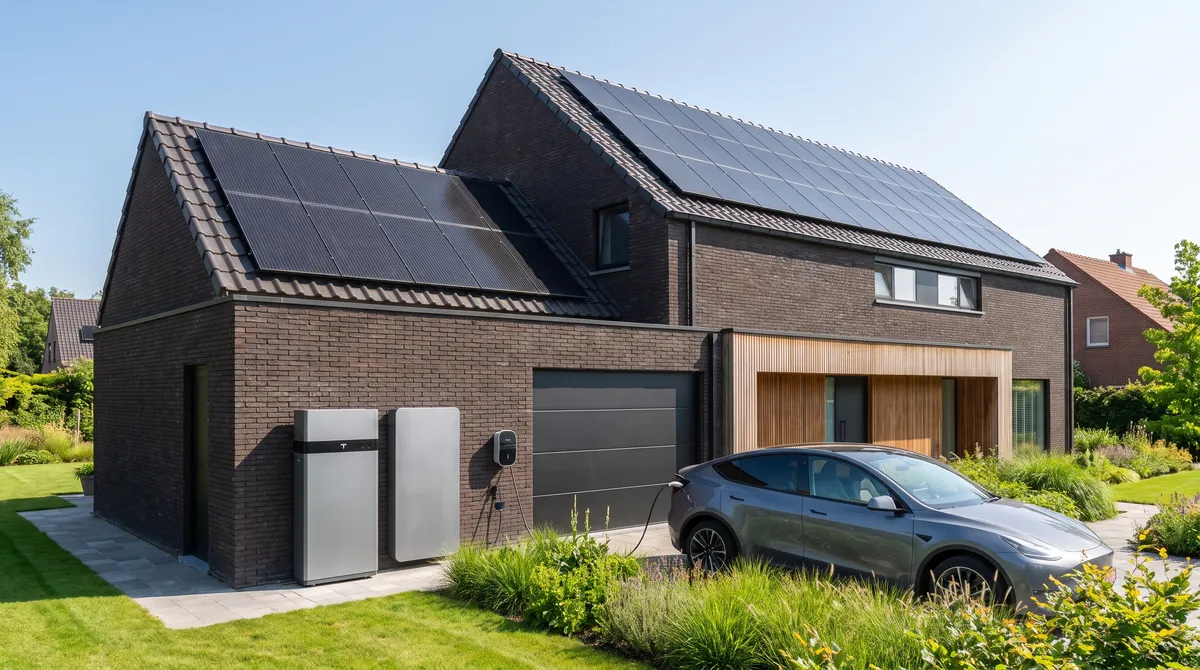
Each combines with photovoltaics to consume your power instead of injecting it at a low price. Concrete benchmarks, designed as a system.
A car shelter whose roof carries the panels: it produces, protects the vehicle and powers the charger right beneath it. Ideal when the roof is poorly oriented, shaded or already occupied — production moves onto the carport.
A wallbox driven by the solar surplus recharges the car with your own power, instead of injecting it. Coupled with the carport, it closes the "I produce, I drive" loop without going through the grid.
The heat pump turns 1 kWh of electricity into 3 to 5 kWh of heat. Powered by your panels, it decarbonises heating and hot water at a very low marginal cost — a household’s biggest self-consumption item.
It stores the day’s surplus to release it in the evening. Self-consumption climbs from ~30% to 60–70%, and some models provide backup in case of a grid outage.
The manager continuously arbitrates between car, water tank, battery and grid to send each produced kWh where it’s worth the most. It’s the brain that makes the other blocks work together.
It’s the shared goal: use as much of your own production as possible. The more driven blocks you add (heat pump, car, battery), the higher the self-consumed share — and the less you depend on the grid tariff.
* Indicative values for a typical residential installation. The right sizing of each block depends on your consumption, your roof and your uses — specified at the energy assessment.
Stacking solutions only makes sense if they talk to each other. Here, honestly, is what you gain by thinking "system", and the points to watch.
The right mix depends on your uses. Three profiles where the combination truly changes the game:
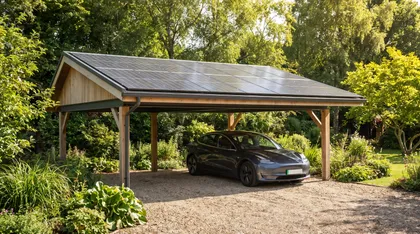
Solar carport + driven charger: the car runs on your own power. The shelter’s production feeds the charging directly, with no grid surcharge.
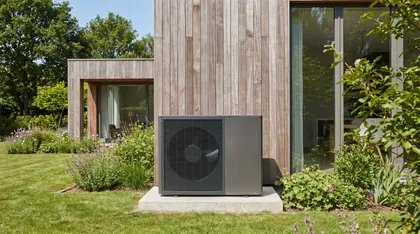
A heat pump powered by your panels replaces gas or oil. The biggest consumption item switches to solar, at a very low marginal cost.

Storing the day’s surplus for the evening pushes self-consumption to 60–70%. With backup, you keep power even during a grid outage.
The foundation always remains photovoltaics: we first size the production, then add the battery or the heat pump according to your uses.
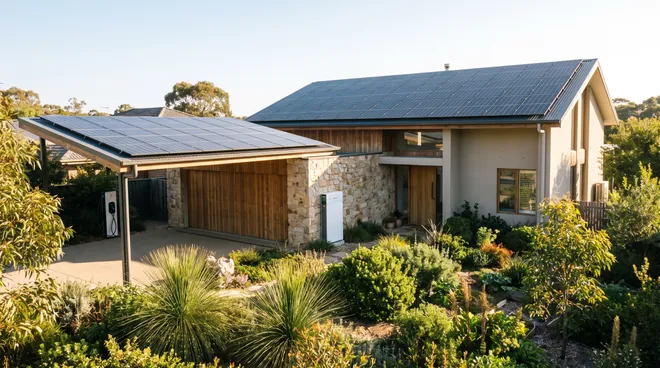
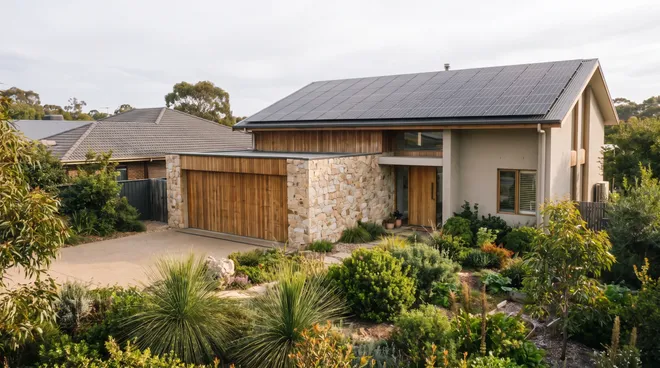
The household was injecting more than half of its production to the grid. We added a solar carport for the electric car, a charger driven by the surplus and a 10 kWh battery, all coordinated by an energy manager. The result: most of the power produced is now consumed on site.
5.0/5 · 1verified reviews
« Devis clair, sans surprise, primes comprises. Un seul interlocuteur du début à la fin. Je recommande sans hésiter pour le photovoltaïque. »
Not everything happens at once. Depending on whether you aim first for mobility, heating or autonomy, the order of investments changes. Compare the three logics.
| Critère | Mobility (charger + carport)Vous êtes ici | Heating (heat pump)Voir la gamme → | Autonomy (battery)Voir la gamme → |
|---|---|---|---|
| Upfront budget | €€ — charger + shelter | €€€ — heat pump install | €€€ — battery |
| Self-consumption gain | High with a daily EV | The highest | High (stored surplus) |
| Direct savings | Fuel replaced | Gas/oil replaced | Evening tariff avoided |
| Comfort delivered | Home charging | Heating + DHW | Outage backup |
| Conditions | Having an EV | Suitable emitters | Surplus to store |
| Ideal if | You drive electric | Heating to replace | You aim for autonomy |
| Foundation block | Panels required | Panels required | Panels required |
A car shelter that produces your power and feeds the charger beneath it. Ideal when the roof is occupied or poorly oriented.
Discover the carport →A wallbox driven by the solar surplus: the car runs on your own power rather than the grid tariff.
See the solar charger →The biggest self-consumption item: decarbonised heating and hot water, powered by your panels.
Discover the heat pump →Stores the day’s surplus for the evening. Self-consumption climbs to 60–70% without changing your habits.
See the battery →Keep power even during a grid outage: a battery with backup for essential loads.
See backup →The foundation of the whole system: we size production first before adding the blocks that make the most of it.
Back to solar →The budget depends on the power, the model and your configuration. Here are installed benchmarks to place each block before the assessment.
Get a priced energy assessment →* Indicative ranges per solution installed, excluding specific configuration and before subsidies. Precise quote during your free assessment.
Because electricity injected to the grid is bought back at a far lower price than what you pay for it. By consuming your own power — via the car, heating or the battery — you make the most of every produced kWh. The more driven blocks you add, the higher your self-consumption climbs and the less you depend on the grid tariff.
Both produce the same way; the carport is the right answer when the roof is poorly oriented, shaded, already occupied, or when you also want to shelter and charge a car. Often we combine the two: the roof for the foundation, the carport to power the charger right beneath it.
Yes. A controllable wallbox adjusts its power to what your panels produce at any moment: it charges first with the available surplus rather than drawing on the grid. The energy manager arbitrates between the car, the water tank and the battery to send the power where it’s worth the most.
It’s often the most profitable combination. The heat pump returns 3 to 5 kWh of heat per kWh consumed; powered by your panels, it decarbonises heating and hot water at a very low marginal cost. Since heating is the household’s biggest item, it’s also the biggest self-consumption lever.
It is, as soon as you produce more during the day than you consume at that moment. The battery stores that surplus to release it in the evening, pushing self-consumption from ~30% to 60–70%. Some models also provide backup in case of a grid outage. It’s all about sizing: we calculate together whether it’s worth it.
Yes, and that’s the whole point. A single contact sizes the blocks so they talk to each other (panels, charger, heat pump, battery, energy management), guarantees their compatibility, files a single subsidy application and provides a coherent warranty. You avoid shuffling between trades and a system of appliances that ignore each other.
A review of your uses, sizing of the solutions and subsidies calculated, by a single installer. Describe your project in under a minute.