

« Châssis, panneaux et pompe à chaleur en une seule fois : on a eu un seul devis, un seul planning et zéro paperasse pour les primes. Le résultat est impeccable et notre facture d'énergie a chuté. On ne pensait pas que ce serait aussi simple. »
Heat pump on radiators: switching your heating without replacing your emitters
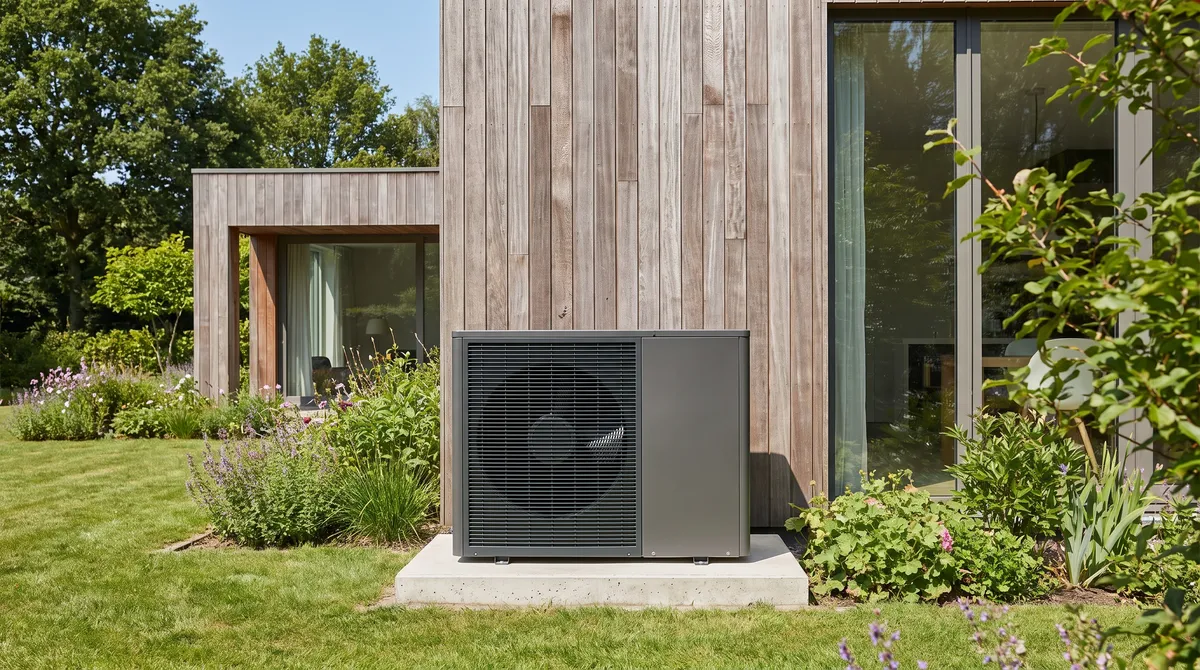
It’s THE renovation question: can you install a heat pump while keeping your radiators in place? Yes, with a high-temperature heat pump able to raise the water to 55–70°C. You still need to check that your radiators are large enough and to fine-tune the insulation to preserve good efficiency.
- SCOP 2.8–3.5
- at high temperature
- R290
- refrigerant for very hot water
- Grants
- up to €6,000 depending on region
What to understand before keeping your radiators
A heat pump on existing radiators comes down to the flow temperature, the resulting efficiency and the sizing of your emitters. Here are the concrete benchmarks.
- Flow temperature 55–70°C heating water
Conventional radiators were sized for hot water (often 70°C with the old boiler). A high-temperature heat pump can supply 55 to 70°C, where a standard heat pump tops out around 45–55°C. It’s the deciding factor for keeping your emitters.
- Efficiency (SCOP) 2.8–3.5
The hotter the water needs to be, the more the heat pump consumes. At a 65°C flow, expect a SCOP of 2.8 to 3.5 versus 4 and above on underfloor heating. Every degree saved on the regime improves the COP: hence the value of lowering the temperature where possible.
- Refrigerant R290
High-temperature models use propane (R290), able to produce water at 70°C with a decent efficiency and a low climate impact (very low GWP), where conventional refrigerants run out of steam above 55°C.
- Radiator surface To check
A radiator gives off less heat when the water is cooler. At 55°C instead of 70°C, its output drops. We check room by room that the exchange surface is enough; we only replace the few undersized radiators.
- Heating curve Regulated
The flow temperature is controlled according to the outside conditions (heating curve): gentle in mid-season, hotter in severe cold. Properly set, it keeps comfort stable while keeping the water as cool as possible for efficiency.
- Home insulation Decisive
The better the home is insulated, the more you can lower the water regime — and gain on COP. Roof, windows and walls matter as much as the heat pump: it’s often the lever that turns an average installation into a profitable one.
* Indicative values for a high-temperature air-to-water heat pump in renovation. Actual efficiency depends on the water regime, the insulation and the radiator sizing — confirmed during the study.
Pros & cons of a heat pump on radiators
Keeping your radiators avoids major works, but requires hotter water that weighs on efficiency. Here, plainly, is what to expect.
Where it shines
- You keep the radiatorsNo underfloor heating to lay: no chasing, no screed, no loss of ceiling height.
- Fast, clean worksWe replace the boiler, connect to the existing network: a few days, little disruption.
- Suited to older homesHigh temperature works for homes under renovation where insulation is still imperfect.
- The end of gas and oilYou leave fossil fuel behind and benefit from heat pump grants, even keeping your emitters.
What you should know
- Lower efficiencyThe hot water demanded by radiators lowers the COP compared with underfloor heating.
- Radiators sometimes undersizedSome rooms will heat poorly on cooler water: a few units must be checked and replaced.
- An electricity bill to watchWithout proper insulation, the high regime can push up heating costs: insulation stays the priority.
- High-temperature models cost moreR290 heat pumps at 70°C cost more than a standard air-to-water unit, but avoid redoing the emitters.
Is a heat pump on radiators right for you?
It’s for homes where redoing the whole heating circuit would be too heavy. A few typical cases:
-
Renovation without major works
You want to drop gas or oil without breaking up the floors or laying underfloor heating. The high-temperature heat pump connects to the existing network.
-
Already generous radiators
Your radiators are large or recent: they give off enough heat at 55°C. We lower the regime, the COP climbs, the installation becomes very profitable.
-
Home being insulated
You’re insulating the roof and windows in parallel. Each improvement lets you lower the flow temperature and get the best from the heat pump.
If your emitters really demand very hot water, a hybrid heat pump keeps the boiler for cold snaps. And if you’re redoing the floors, underfloor heating remains the ideal emitter for a heat pump.


A high-temperature heat pump on retained cast-iron radiators
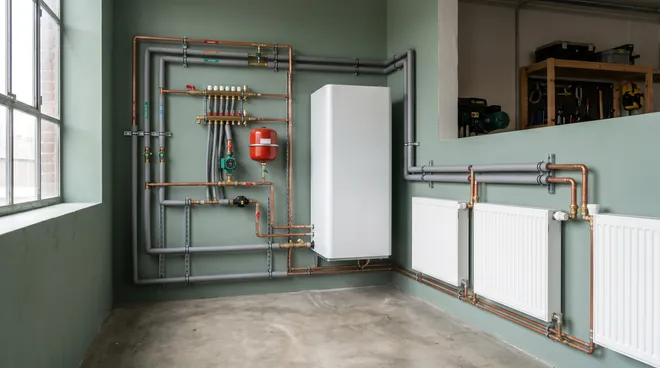
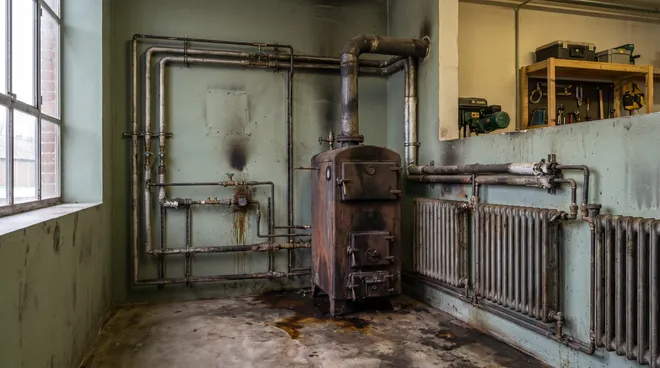
The owner wanted to abandon oil without touching the cast-iron radiators. After a sizing check, two underpowered radiators were enlarged; the rest were kept. An R290 heat pump controlled by a heating curve feeds the network at 60°C at peak, with reinforced roof insulation done in parallel.
- 2 radiatorsreplaced only
- 60°Cflow at peak
- −55%on the heating bill
They chose wendows
5.0/5 · 3verified reviews
« Passage du mazout à une pompe à chaleur air-eau. Chantier propre, anciens radiateurs conservés. La maison est mieux chauffée pour bien moins cher. »
« PAC air-air réversible installée avant l'été. Confort été comme hiver, et le SAV répond vite. Très satisfait du suivi. »
Radiators, underfloor heating or air-to-water?
Keeping your radiators avoids the works, but underfloor heating remains the most profitable emitter for a heat pump. Compare point by point, then open the solution that concerns you.
| Critère | Heat pump + radiatorsVous êtes ici | Heat pump + underfloor heatingVoir la gamme → | Air-to-waterVoir la gamme → |
|---|---|---|---|
| Flow temperature | 55–70°C (high temp.) | 30–40°C, ideal | 35–55°C by emitter |
| Efficiency (SCOP) | 2.8–3.5 | 4 and above | 3.5–4.5 |
| Scale of works | Light, network kept | Heavy (screed, chasing) | Variable |
| Installation cost | €€ — emitters kept | €€€€ — floors to redo | €€€ by regime |
| Thermal comfort | Good, fast heat | Excellent, gentle and even | Good |
| Older home | Well suited | If major renovation | Depending on insulation |
| Ideal for | Renovation without major works | New build or full renovation | Boiler replacement |
- the system
Air-to-water heat pump
The heat pump that feeds your water circuit, radiators as well as underfloor heating. The heart of any heat pump heating installation.
Discover air-to-water → - vs radiators
Underfloor heating
The ideal low-temperature emitter for a heat pump: higher SCOP, gentle comfort. Worth considering if you’re redoing the floors.
Compare underfloor heating → - alternative
Hybrid heat pump
Heat pump + retained boiler for severe cold. The solution when the network demands really hot water.
See hybrid → - to understand
All heat pump types
Air-to-water, air-to-air, geothermal, high temperature: the full overview to choose the heat pump right for your home.
Compare the types → - budget
Heat pump grants & aid
Regional grants, reduced VAT and financing: what the State covers on your heat pump in 2026.
See heat pump aid → - ↑ category
The whole heat pump range
An overview of our heat pumps in Belgium: systems, emitters, sizing and grants on one page.
Back to the heat pump guide →
How much does a heat pump on existing radiators cost?
The price depends on the power output, the high-temperature model and the number of radiators to adapt. Keeping the existing network limits the installation cost. Here are some benchmarks for an installed system.
See the detailed heat pump prices →* Indicative ranges for an installed high-temperature air-to-water heat pump, excluding heavy network adaptation. A costed estimate is provided with your free study.
- High-temperature heat pump from €12,000R290 air-to-water installed, on existing network
- Radiator adaptation €250–600per undersized radiator replaced
- Heat pump grant up to €6,000depending on region and your income
- Reduced VAT 6%for renovation (home > 10 years old)
Your questions about heat pumps and radiators
Can you install a heat pump while keeping your radiators? +
Yes, provided you choose a high-temperature heat pump able to raise the water to 55–70°C and check that your radiators are large enough to give off their heat at that regime. Most renovation installations are done this way: we keep the network, replace only the boiler and, if needed, the few undersized radiators.
What’s the difference between a high- and a low-temperature heat pump? +
A low-temperature heat pump supplies water around 35–45°C, ideal for underfloor heating. A high-temperature heat pump reaches 55–70°C, which conventional radiators require. The hotter the water, the more the heat pump consumes: high temperature therefore shows a lower efficiency (COP), offset by the absence of major works.
Are my radiators large enough? +
A radiator gives off less heat when the water is cooler. We calculate, room by room, the output delivered at the target regime and compare it to the needs. Recent steel panel radiators usually pass; some old models that are too small are replaced. That’s the purpose of the sizing study.
Why is efficiency lower on radiators? +
Because the heat pump must produce hotter water than with underfloor heating. Each extra degree makes the compressor work harder and lowers the COP. That’s why we lower the flow temperature as much as possible, notably by reinforcing the home’s insulation.
Should I insulate before installing the heat pump? +
Ideally, yes. The better the home is insulated, the more you can lower the water regime, thus improving efficiency and reducing the bill. Roof, windows and walls are the priorities. If the insulation works are spread out, we size the heat pump for the insulated scenario to get the best from it afterwards.
And if my network requires really hot water? +
If some radiators demand too high a regime for a heat pump alone, a hybrid heat pump is a good answer: the heat pump covers most of the year and the existing boiler takes over during severe cold. This keeps the comfort without oversizing the heat pump.
Get your free heat pump on radiators study within 48h
Free site survey, your radiator sizing checked, grants calculated. Describe your project in under a minute.
- Radiator sizing checked
- Grants & 6% VAT handled for you
- Installed by our certified installers