
Aller au contenu
The energy one stop shop — active across Belgium
Air-to-water heat pump · Monobloc

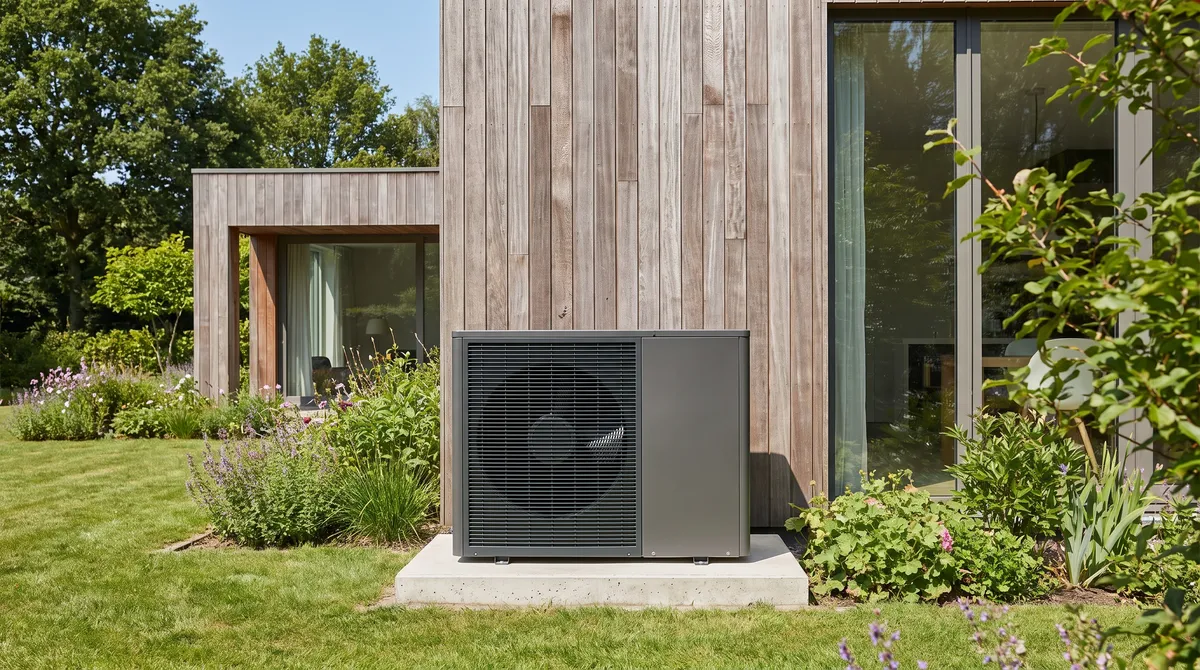
Monobloc air-to-water heat pump: all the refrigerant outside, only water enters your home

In a monobloc, the entire refrigerant circuit stays in the outdoor unit: only two heating-water pipes run into the house. The result: no refrigerant handling on site, simpler and faster fitting, and no bulky indoor module to find space for. The direct solution for renovation.

SCOP 4.2
at 35 °C flow temperature
0 module
indoors
1 day
typical fitting
Monobloc air-to-water heat pump: all the refrigerant outside, only water enters your home
Only water entersno refrigerant indoors
Simplified fittingno refrigeration engineer for the link
Technical specs

What a monobloc is really worth

The benchmarks that matter for a monobloc air-to-water heat pump fitted by our teams in Belgium. Concrete figures, no marketing.

  • Seasonal efficiency
    SCOP 4.2 at 35 °C

    For every 1 kWh of electricity used, the pump delivers more than 4 kWh of heat on average across the season. The SCOP drops if the flow temperature rises: aim for a low-temperature circuit (underfloor heating or oversized radiators).

  • Link to the house
    2 water pipes

    Unlike the split, no refrigerant runs into the house: only heating water flows back and forth. The sealed refrigerant circuit stays confined to the outdoor unit, charged at the factory.

  • Frost protection
    Glycol required

    Since water circulates outside, the outdoor circuit must be protected from frost with antifreeze (glycol) or an electric resistance. A key design point under the Belgian climate — we size it as a matter of course.

  • Flow temperature
    up to 60 °C

    Enough for well-sized existing radiators and hot water production. Efficiency stays better at low temperature: the ideal remains underfloor heating at 30–35 °C.

  • Indoor footprint
    Almost none

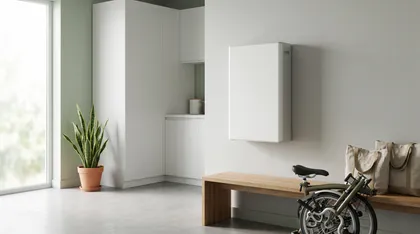
    No wall-mounted hydraulic module indoors: the bulk sits in the outdoor unit. We only connect the water flow and return to the existing circuit and, where applicable, a hot water tank.

  • Power supply
    Single or three-phase

    Depending on output, the monobloc connects in 230 V single-phase or 400 V three-phase. For Belgian suburban renovation, single-phase is enough in most cases — checked during the survey.

* Indicative values for a standard-range monobloc at low temperature. The real SCOP depends on the heating circuit, the emitter and the sizing — specified during the survey.

Full transparency

Pros & limits of the monobloc

No configuration is perfect for every project. Here, honestly, is where the monobloc excels and where the split takes the lead.

What makes it strong

  • Simpler and faster fittingNo refrigerant link to make on site: fewer steps, the job often wrapped up in a day.
  • No certified refrigeration engineer neededThe link to the house is hydraulic: a heating installer is enough, with no refrigerant handling.
  • Zero bulky indoor moduleIdeal when space is tight inside: we only connect the water to the existing circuit.
  • Refrigerant sealed and factory-chargedSealed refrigerant circuit from the factory: no risk of a leak from a fitting badly made on site.

What you should know

  • Frost risk on the water circuitWater flows outside: glycol or a frost-protection resistance is needed, and a prolonged power cut in winter must be anticipated.
  • Heat losses on the linkThe water pipes between the unit and the house must be short and well insulated, otherwise efficiency drops.
  • Limited unit-to-house distanceThe unit must stay close to the water entry point; a distant location penalises efficiency.
  • Glycol to monitor over timeThe antifreeze must be checked and renewed periodically to keep its protective power.
Which project

Is the monobloc right for you?

It comes into its own whenever you want a direct fit, with no refrigeration complications and no space lost indoors. A few cases where it shines:

  • Simple renovation

    Simple renovation

    To replace a boiler without a major indoor job: we keep the existing water circuit and connect the outdoor unit. Quick start-up.

  • Little space indoors

    Little space indoors

    No wall-mounted hydraulic module to fit: the monobloc is perfect for homes where every square metre indoors counts.

  • Low-temperature circuit

    Low-temperature circuit

    Paired with underfloor heating or oversized radiators, it delivers its best SCOP and the gentlest bill.

Unit far from the house, or very harsh winters?

If the unit has to sit at a distance or you are worried about frost, the split air-to-water range keeps the water safely indoors. And to secure deep-cold spells, the hybrid heat pump keeps a boiler on standby.

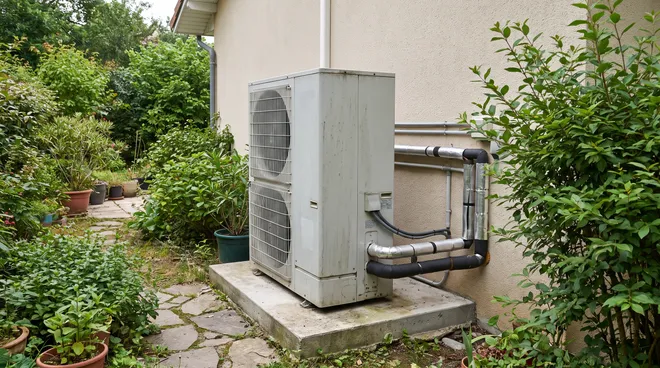
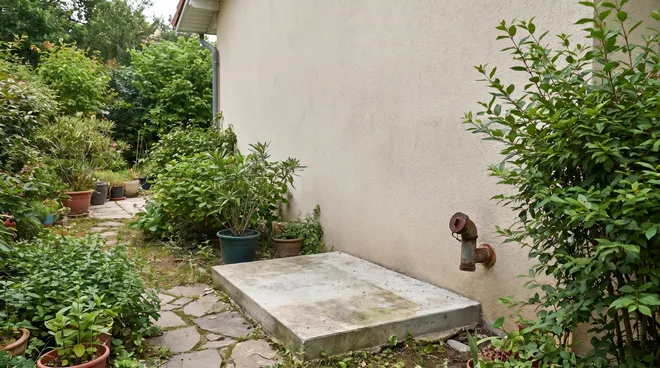
AFTER photo — monobloc unit fitted along the façade
BEFORE photo — old oil boiler in a cellar
Avant Après
Glissez la poignée pour comparer
Real case · renovation, Gembloux

An oil boiler replaced in a day by a monobloc

The owner of an 80s house wanted to drop oil without transforming the laundry room. We installed a monobloc air-to-water pump connected to the existing radiator circuit, with a glycol-protected loop: the job was wrapped up in a day, with no refrigeration engineer and no indoor module to fit.

  • 1 dayof fitting, no refrigeration engineer
  • SCOP 4.0on adapted radiators
  • −65%on the heating bill
Customer reviews

They chose wendows

5.0/5 · 3verified reviews

« Châssis, panneaux et pompe à chaleur en une seule fois : on a eu un seul devis, un seul planning et zéro paperasse pour les primes. Le résultat est impeccable et notre facture d'énergie a chuté. On ne pensait pas que ce serait aussi simple. »
Famille DuboisWavre · Brabant wallon
« Passage du mazout à une pompe à chaleur air-eau. Chantier propre, anciens radiateurs conservés. La maison est mieux chauffée pour bien moins cher. »
Ahmed B.Charleroi
« PAC air-air réversible installée avant l'été. Confort été comme hiver, et le SAV répond vite. Très satisfait du suivi. »
Nathalie F.Verviers
Compare the options

Monobloc, split or hybrid?

The monobloc wins on fitting simplicity and the absence of an indoor module. Compare it point by point with the classic air-to-water range and the hybrid, then open the solution that suits you.

Critère Air-to-water monoblocVous êtes ici Air-to-water heat pump (range)Voir la gamme → Hybrid heat pumpVoir la gamme →
Link to the house Water only Refrigerant (split) Water + gas/oil
Fitting simplicity The simplest Refrigeration engineer needed More complex
Indoor module None Hydraulic module Module + boiler
Frost risk To protect (glycol) Water safe indoors Water safe indoors
Unit-to-house distance To keep short More flexible More flexible
Deep cold Good at low temp. Good at low temp. Boiler takes over
Ideal for Simple renovation, little space Free placement Older home, harsh winters
Indicative benchmarks for common ranges. The right choice depends on your house and the siting — we fine-tune it together during the survey.
Indicative price 2026

What does a monobloc air-to-water heat pump cost?

The price depends on output, the emitter in place and the frost protection. The monobloc’s simplified fitting often lightens the labour bill. Here are benchmarks for installed kit.

See the detailed heat pump price list →

* Indicative ranges for an installed monobloc, excluding specific configurations. Costed estimate during your free quote.

  • Monobloc installed
    from €9,500
    8–11 kW unit, water connection
  • With DHW tank
    from €12,000
    integrated domestic hot water
  • Heat pump grant
    up to €4,000
    depending on region and income
  • Reduced VAT
    6%
    in renovation (home > 10 years)
Monobloc air-to-water heat pump FAQ

Your questions on the monobloc

What is the difference between a monobloc and a split? +

In a monobloc, the entire refrigerant circuit stays in the outdoor unit: only two heating-water pipes enter the house. In a split, the refrigerant runs to an indoor module where the exchange takes place. The monobloc therefore avoids any refrigerant link on site.

Do you need a certified refrigeration engineer to fit it? +

No. Since no refrigerant runs into the house, the link to the home is purely hydraulic. A qualified heating installer is enough, which simplifies and speeds up the job — often wrapped up in a day.

Can the outdoor water circuit freeze? +

This is the monobloc’s main point of attention in Belgium. Since water flows outside, we protect the circuit with antifreeze (glycol) or a frost-protection resistance, and anticipate any prolonged power cut in winter. We size this protection as a matter of course.

Is there a module to install indoors? +

No, and that is one of its big advantages: no wall-mounted hydraulic module to fit inside. We only connect the water flow and return to the existing circuit and, if needed, a hot water tank. Ideal when space is tight indoors.

How far can the unit be placed from the house? +

As close as possible to the water entry point. The longer the hydraulic link, the more heat losses there are and the lower the efficiency, even with well-insulated pipes. A close location is therefore recommended — we confirm the spot during the survey.

What grants are available for a monobloc air-to-water heat pump? +

Grants depend on performance (SCOP), not on the type of link. A high-performance monobloc qualifies, depending on your region and income, for a heat pump grant, 6% VAT in renovation and sometimes a low-rate loan. We handle the paperwork for you.

Get your free monobloc air-to-water heat pump quote within 48h

Free home survey, grants calculated, a single point of contact. Describe your project in under a minute.

  • Free and with no commitment
  • Grants & 6% VAT handled for you
  • Frost protection sized and installation by our certified fitters